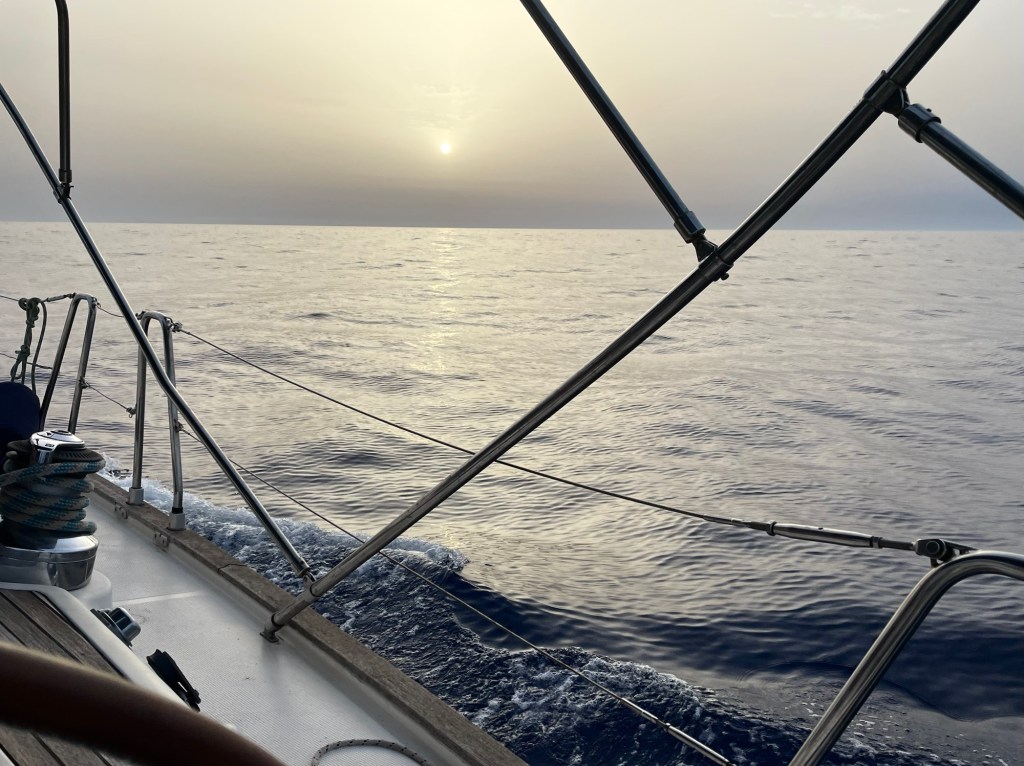
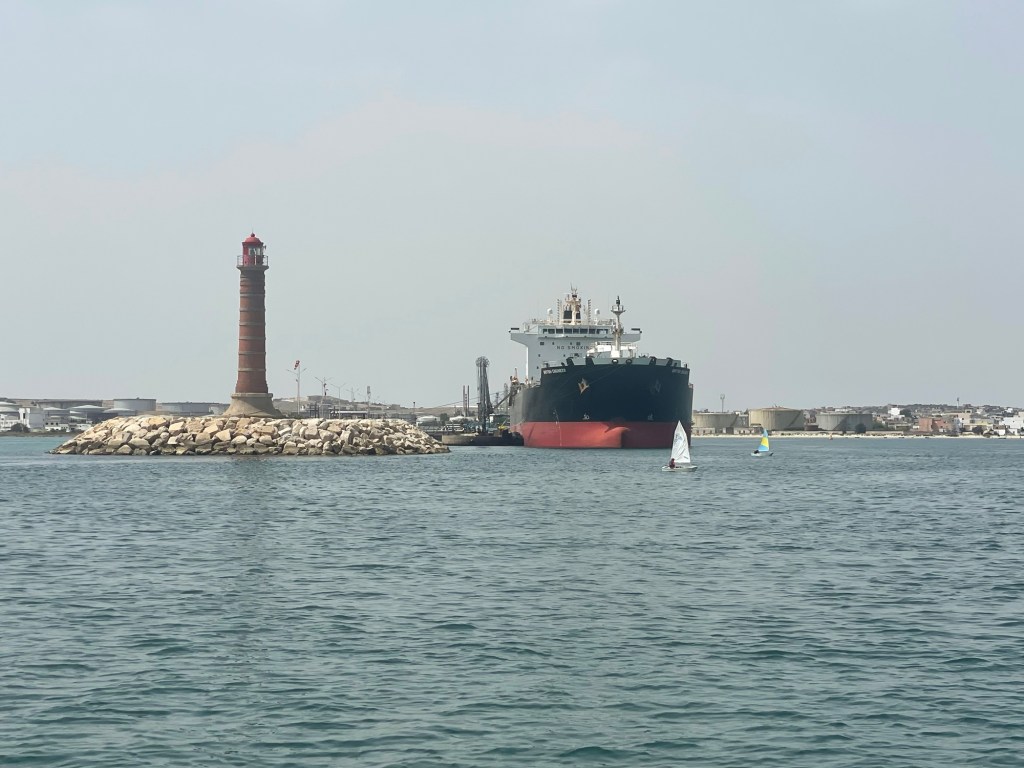
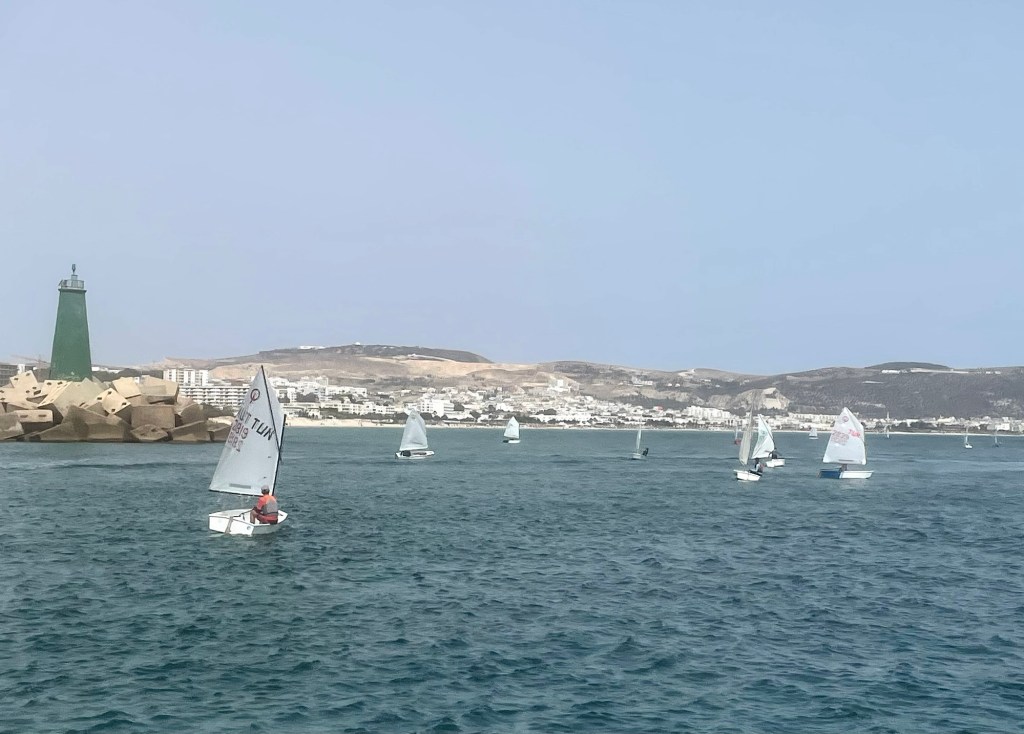
Our sail to Bizerte in Tunisia started well. The water was smooth and there was enough wind to put a sail up, but not too much to blow us around. About half-way across however, our autopilot stopped working, which meant the boat had to be manually steered for the next 11 hours. It was very tough, especially for our skipper Roger who did all the night sailing. As we approached the marina we were surrounded by a fleet of small yachts out for sailing lessons. We were very happy to finally be there!
Before we could go on land, the local customs officials had to clear us. The entire procedure took about an hour and involved checking our boat registration and insurance papers, stamping our passports, taking our photo and a thumb print and looking over the boat. We had to declare unopened bottles of alcohol … only two! The officials were extremely friendly, even giving us tips on where to eat and what to see in Bizerte. If only it was this easy in Italy!
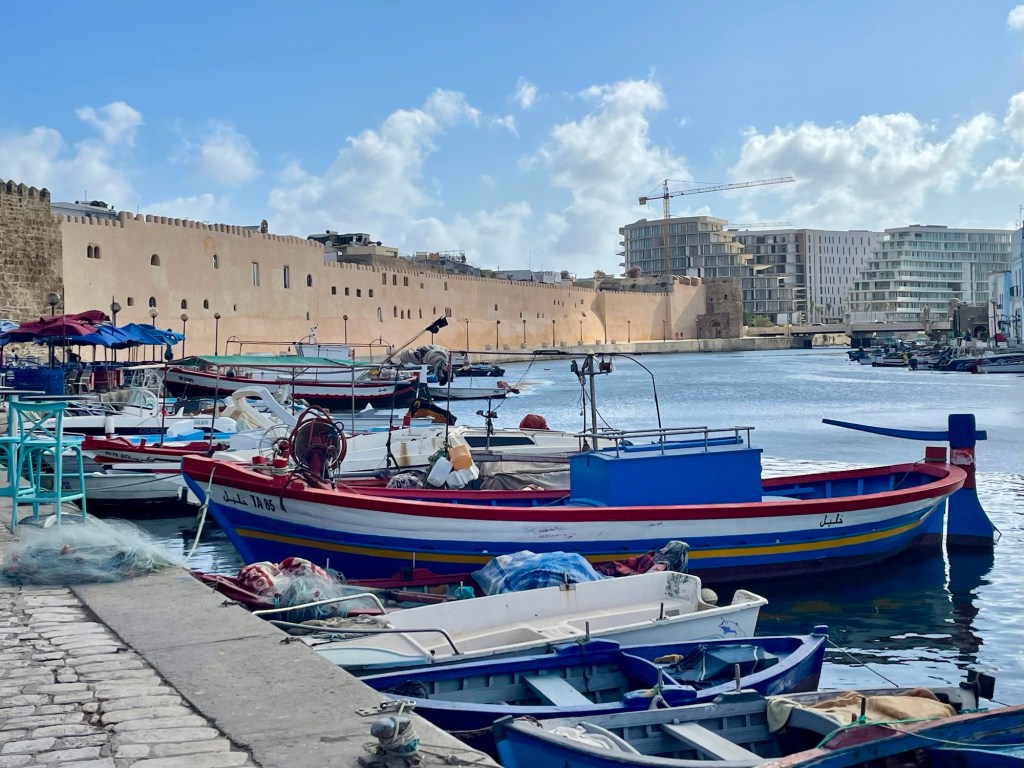
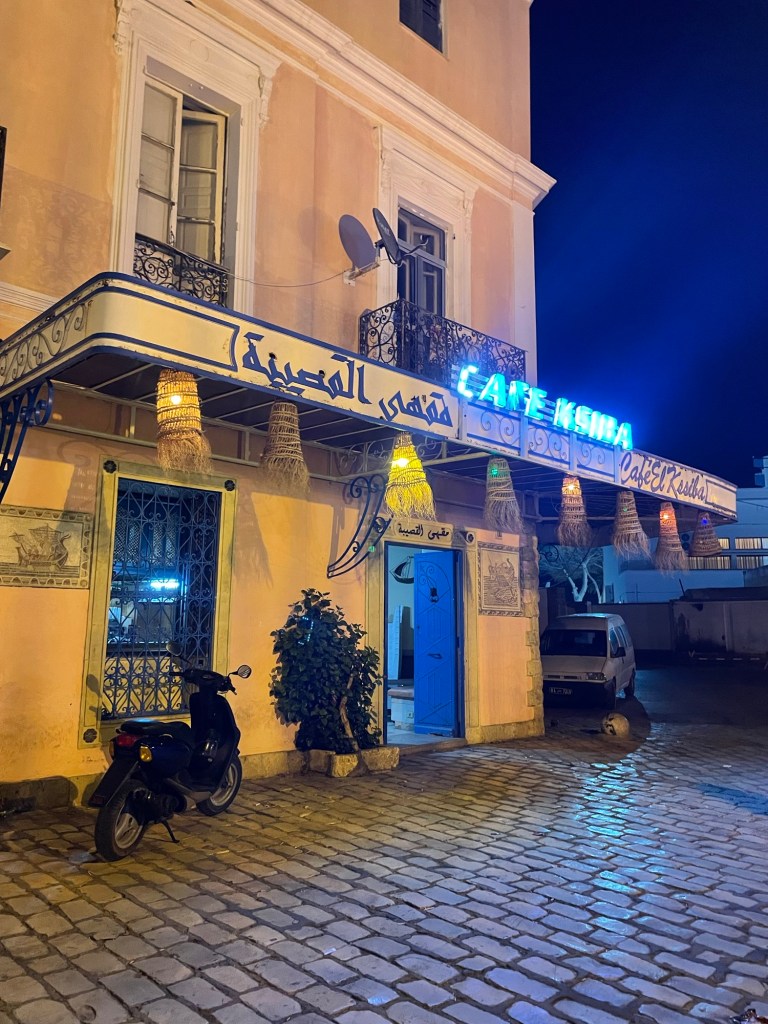
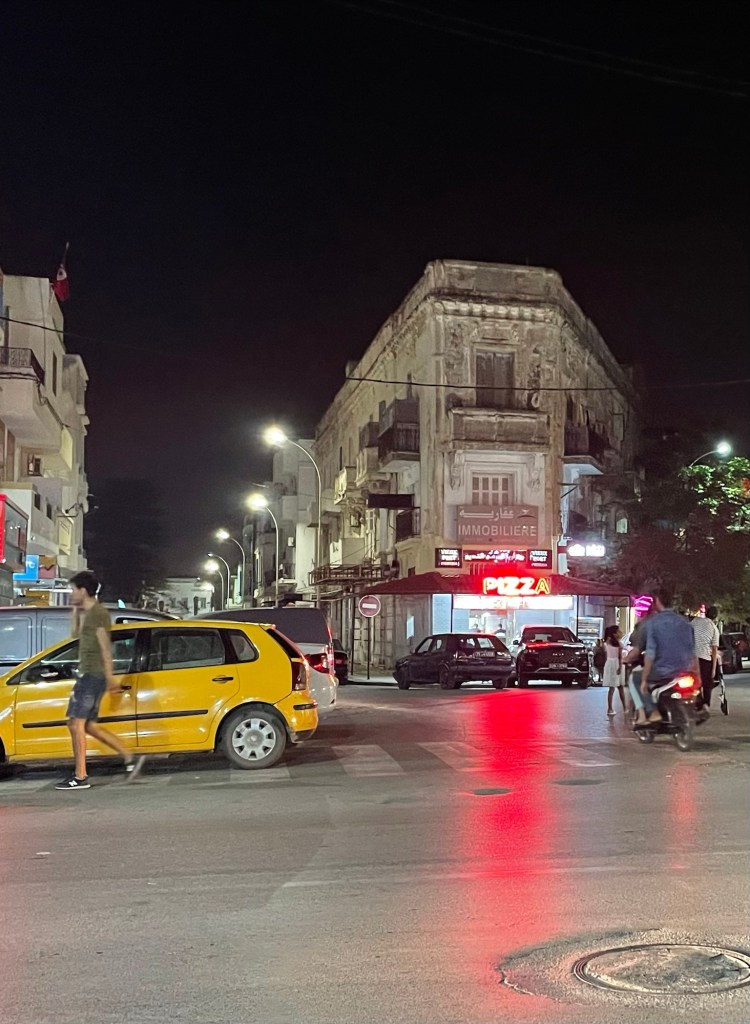
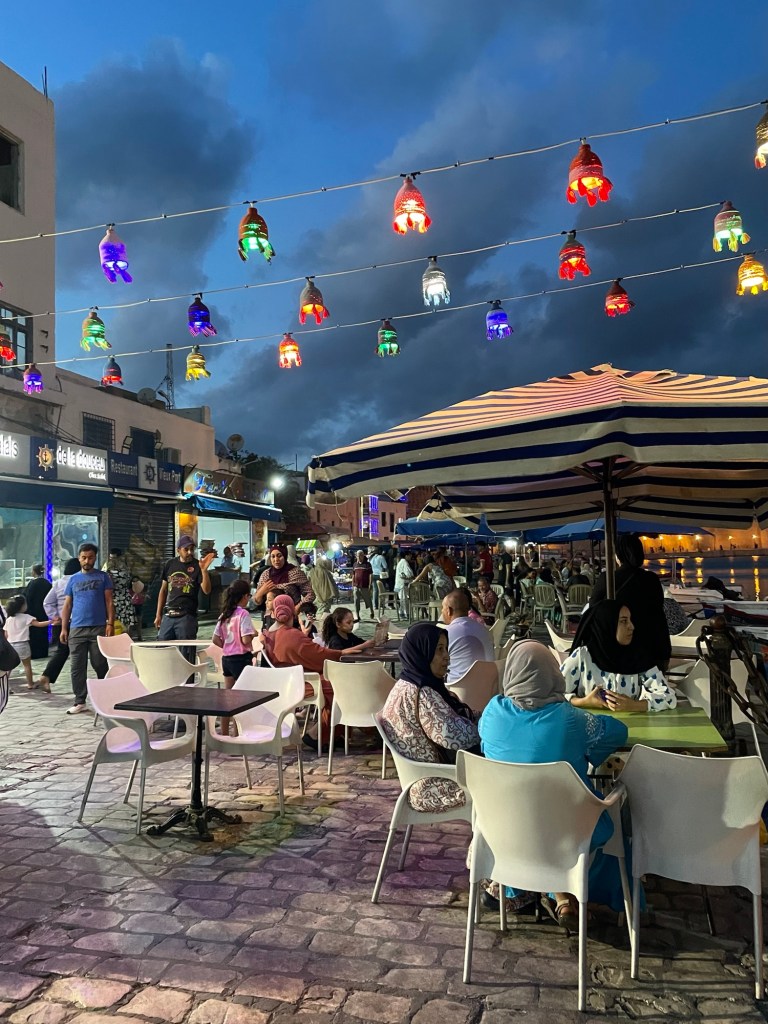
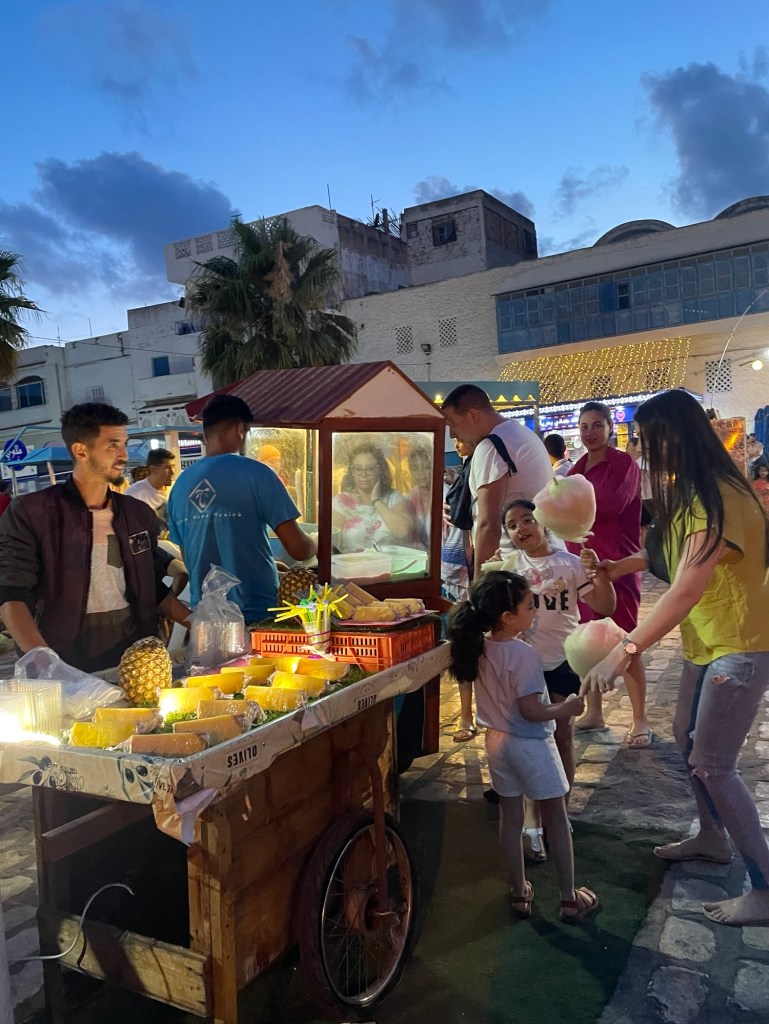
Early evening we took the fifteen-minute walk into town and the Old Harbour. It was Sunday night and the streets were packed with food vendors, families and couples out walking, and lots of cats. It was a lovely harbour but there was rubbish everywhere on the ground and in the water which we found a bit confronting, but soon got used to it.
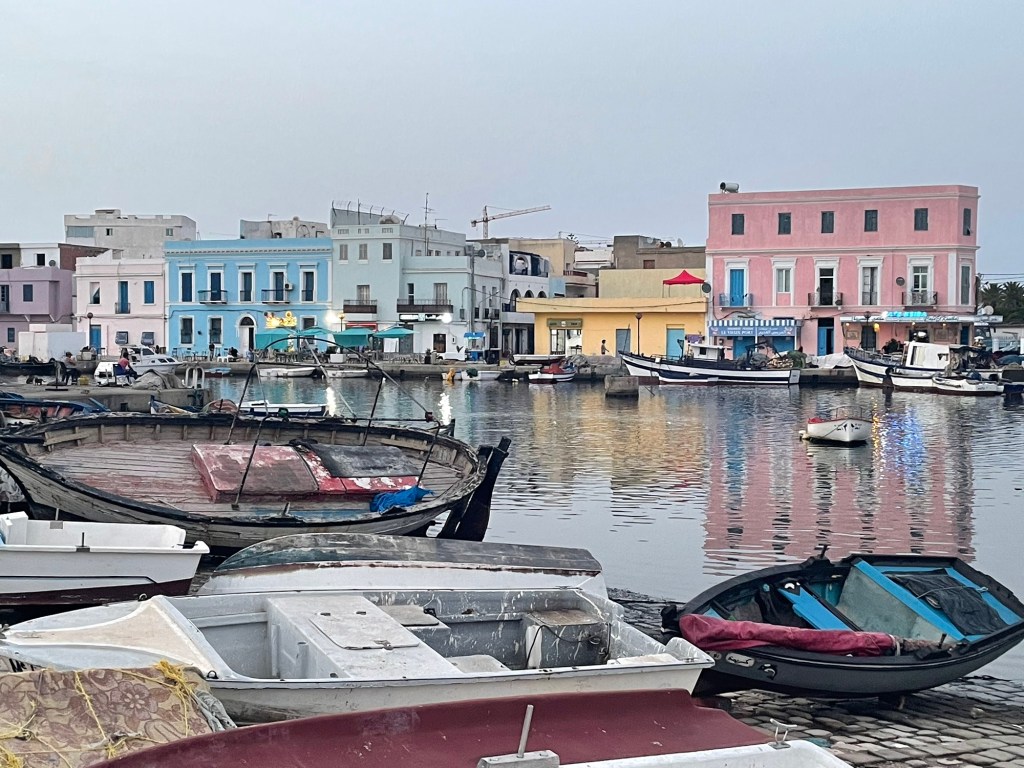
There were many places to eat but most appeared to be takeaway venues and we had no idea what they were serving as there were no visible menus. We were a little overwhelmed but eventually settled into the rhythm of this very different, and somewhat exotic environment and found somewhere to eat. Most signs were in Arabic and French and with our very basic knowledge of French, and a little help from Google Translate, we found a blackboard menu outside a restaurant that we understood. The young waiter led us to a table near the water and gave us a menu, which was in French. Many of the dishes included seafood and cous cous. There were also more familiar dishes such as steak and pasta. I was eager to try something local and ordered the lamb with cous cous. Being a Muslim country, most restaurants don’t serve alcohol, so we asked for some bottled water and waited for our meal, a little unsure of what to expect.
A few minutes later, the waiter gave us each a bowl and some cutlery and then came back with a large tray holding a ceramic pot, four small plates, a basket of bread rolls and some slices of lime. From the pot he ladled some soup into each of our bowls explaining that it was fish soup and that it was a little spicy. He then handed each of us one of the small plates, again telling us it was a bit spicy and what was in it. We only caught two of the ingredients, tomato and olives. The fish soup was spicy and delicious. The other dish consisted mostly of egg. Again, it was beautifully flavoured and not too spicy.
Once we’d finished the surprise entrée, he arrived back to the table with a huge wooden board holding our main dishes. My lamb dish was beautifully flavoured and the meat fell off the bone. The cous cous was delicately spiced and included a few vegetables. We were all very satisfied with our choice. After clearing our plates he came back to the table with a plate of peaches for dessert. It was an enjoyable experience and a great start to our stay in Bizerte.
We walked back to the marina feeling a little more familiar with our surroundings. The streets were noisy and chaotic, but the city was fascinating and we were eager to see more.
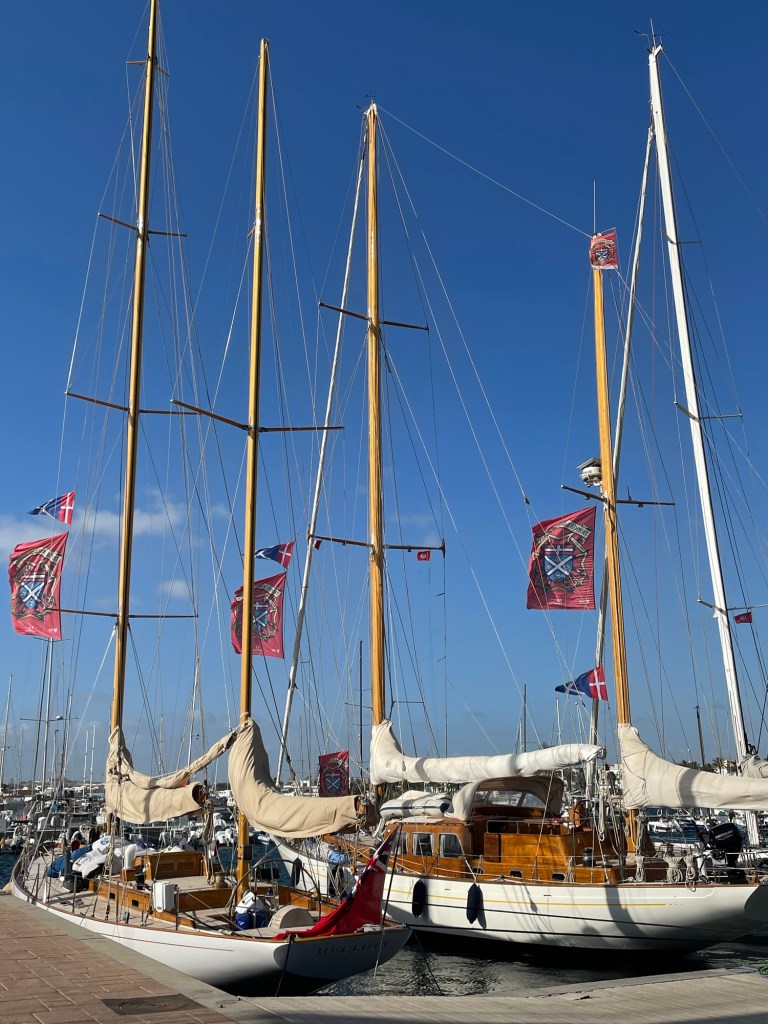
The strong winds had set in and it was clear we wouldn’t be leaving for quite a few days. Many other boats were in a similar predicament including a fleet of French boats taking part in a sailing rally, their flapping flags a constant sign of how windy it was.
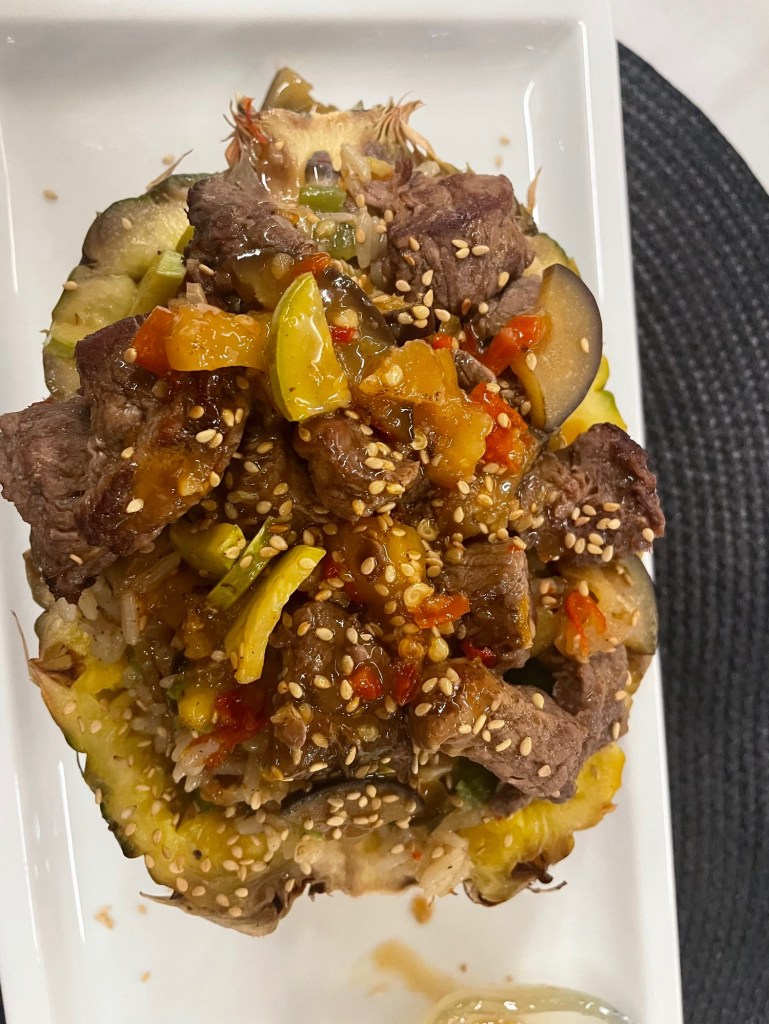
On our second evening we tried a more up-market restaurant. The menu included a few Asian inspired dishes, including Thai Beef with Chinese rice. Feeling brave a few of us ordered it, wondering if we’d made the right decision. Although the menu had mentioned pineapple in the rice, we were still surprised when it arrived at the table served in a hollowed-out pineapple. It smelled good so we dug in. It was quite tasty but we hadn’t counted on so much chilli! At the end of our meal, we were given a cup of mint tea with honey. It was sweeter than I’m used to but a satisfying end to a very spicy meal.
Robyn and I were eager to explore the Kasbah Medina which is the old part of town and so headed in after breakfast the next day. We hadn’t got far when an older man said hello and started walking beside us. He introduced himself as Samir and said that he worked at the marina, had seen us there and wanted to show us around. We were a little hesitant at first and tried to lose him but he was persistent and seemed nice, so we went along with it.
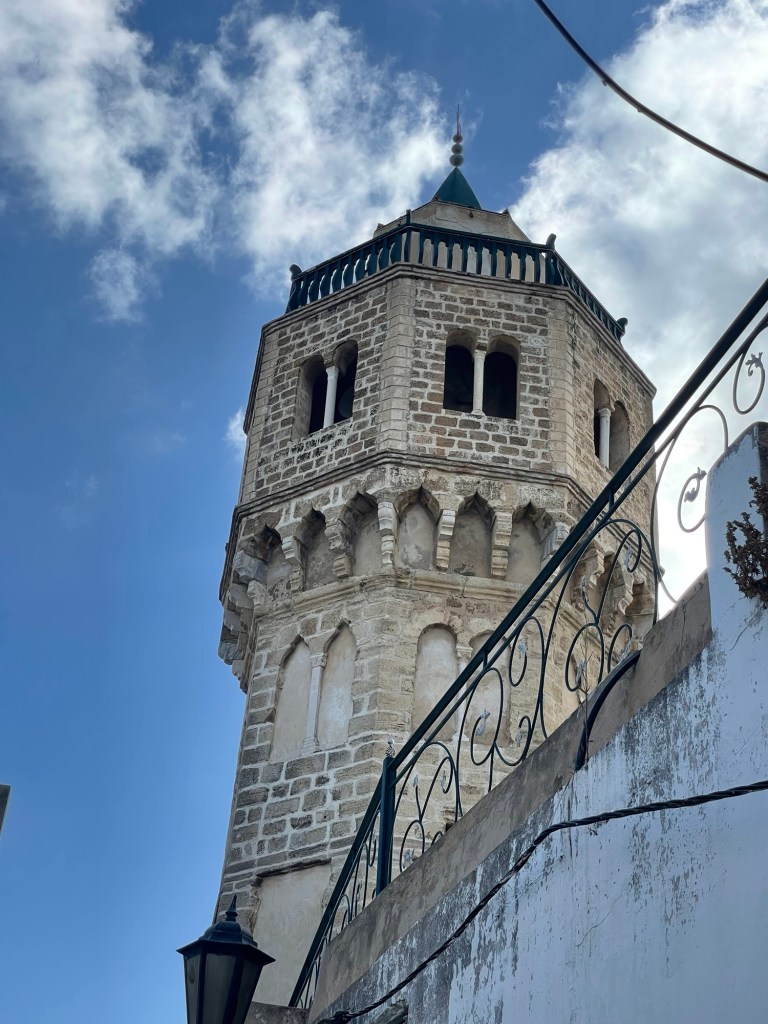
For the next few hours, Samir led us on a fascinating tour through many of the old streets, telling us about the traditions and culture of Bizerte. He explained that the old city has four sections … Italian, Turkish, Spanish and Berber … due to its many rulers and settlers over the centuries, We learned that the tower on the Turkish mosque has eight sides, whereas the others have four.
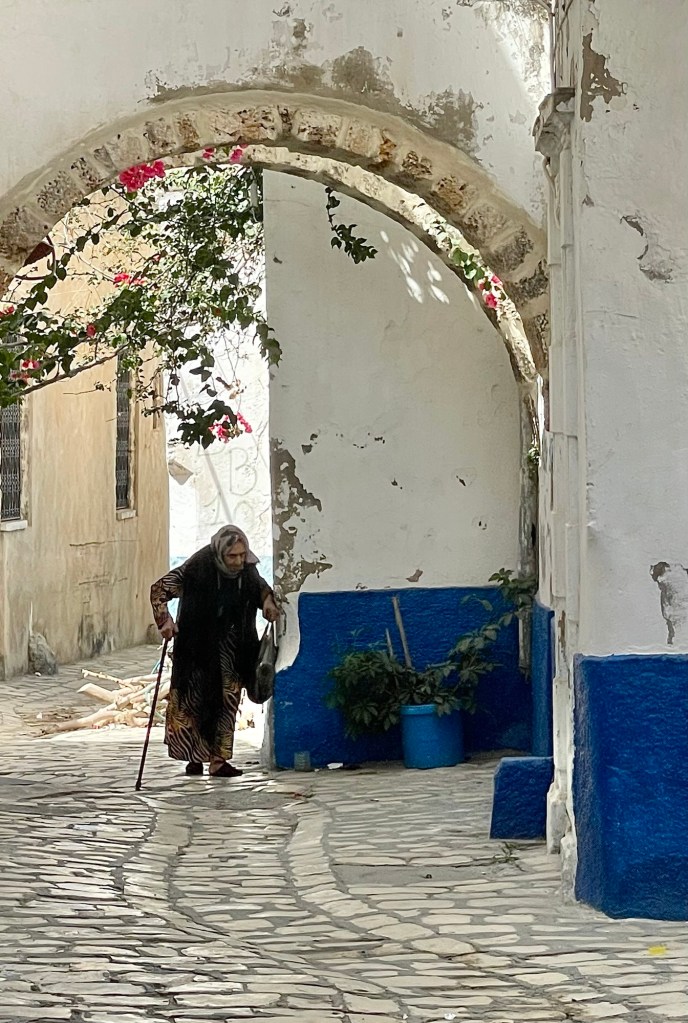
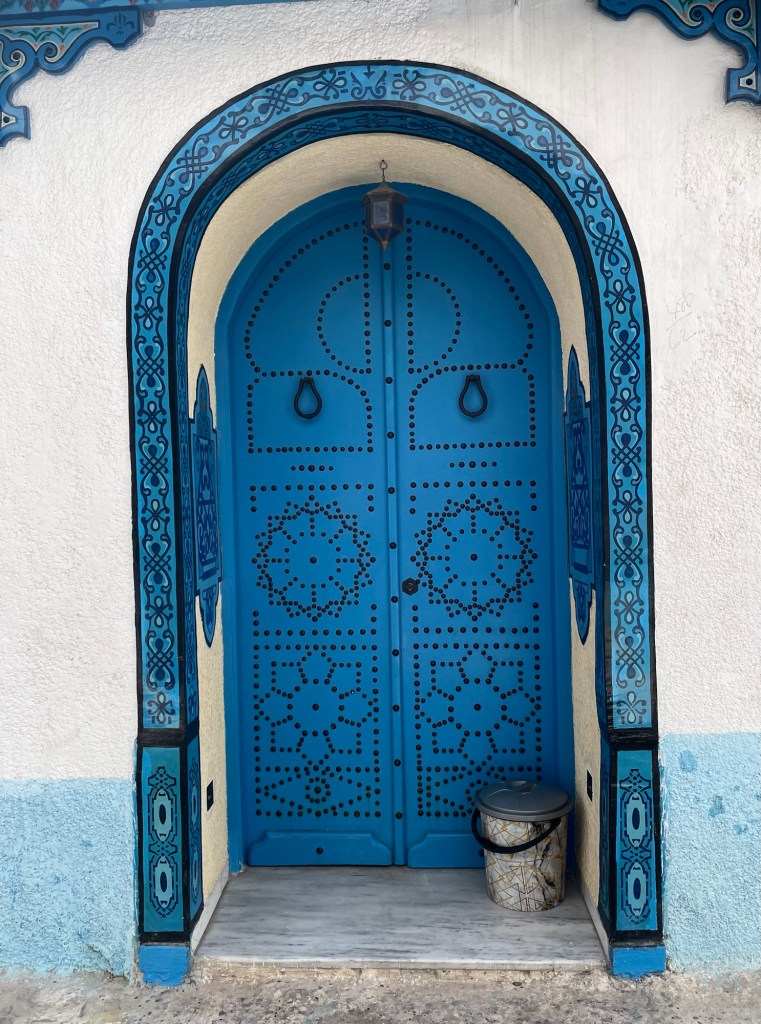
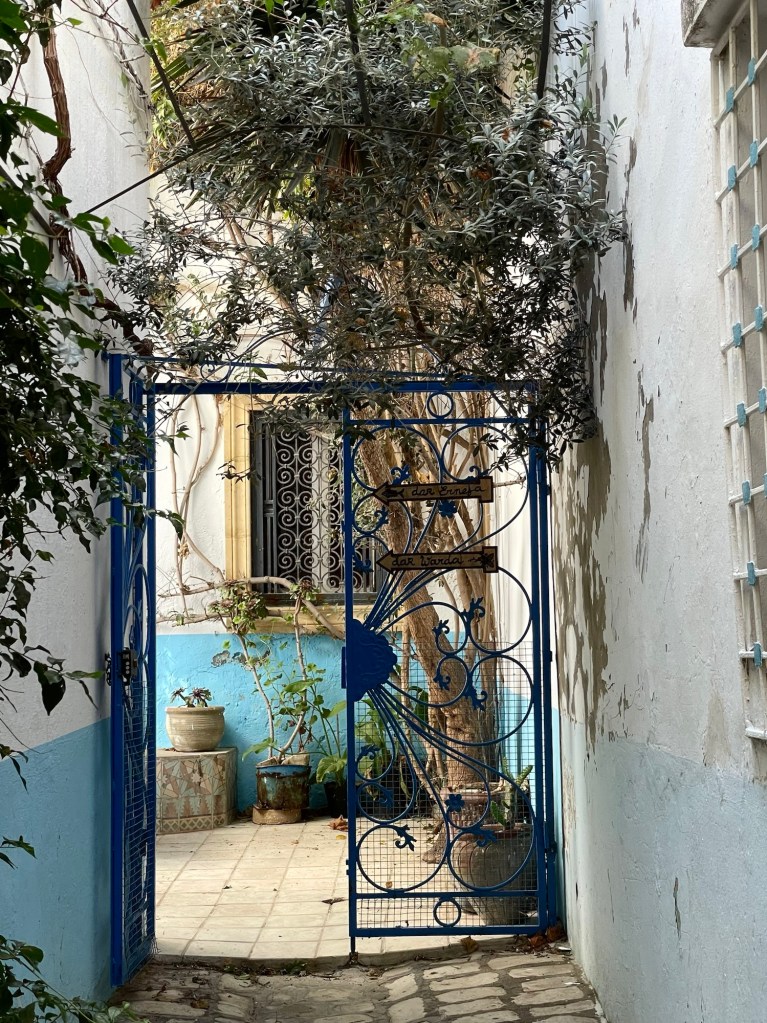
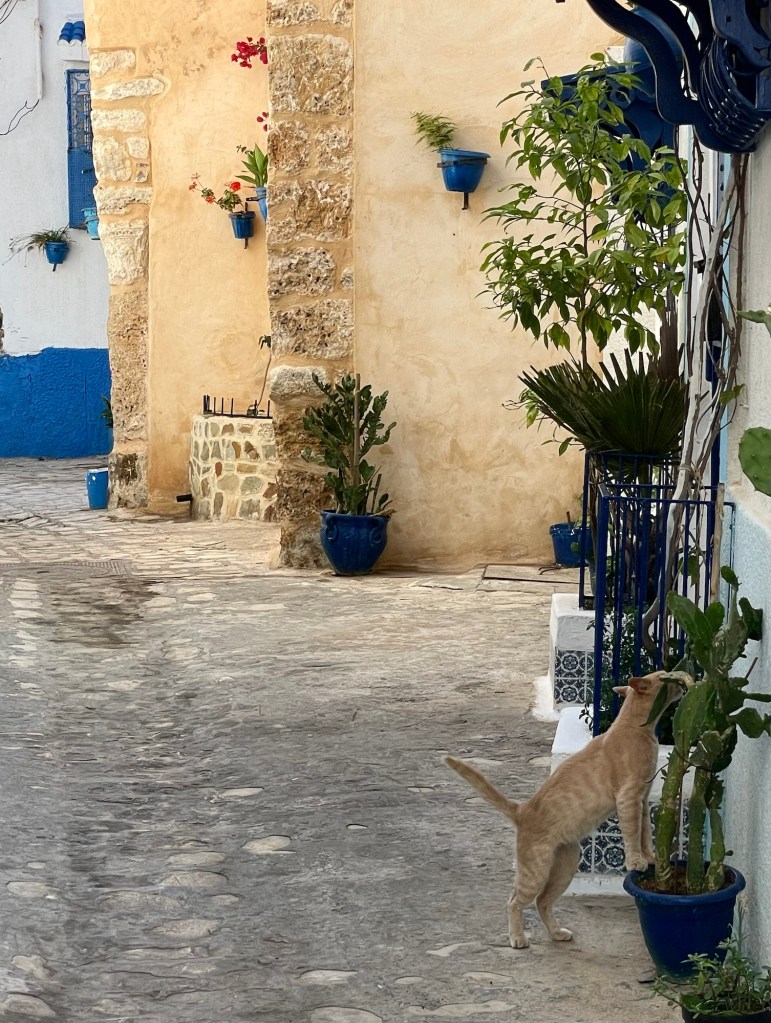
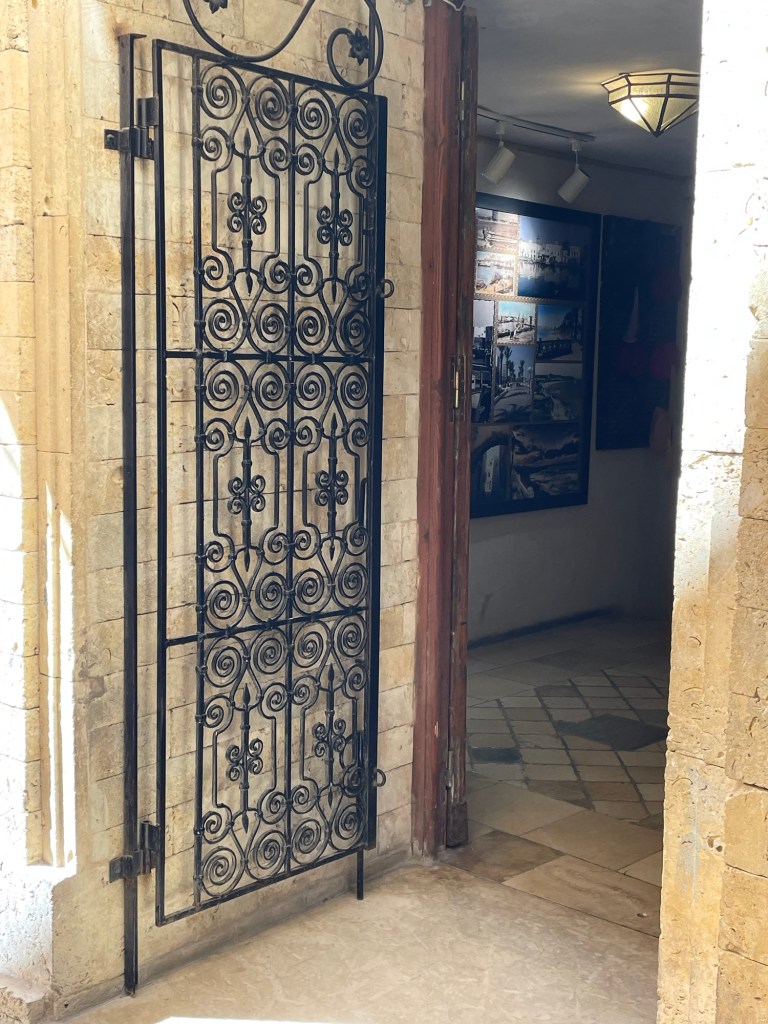
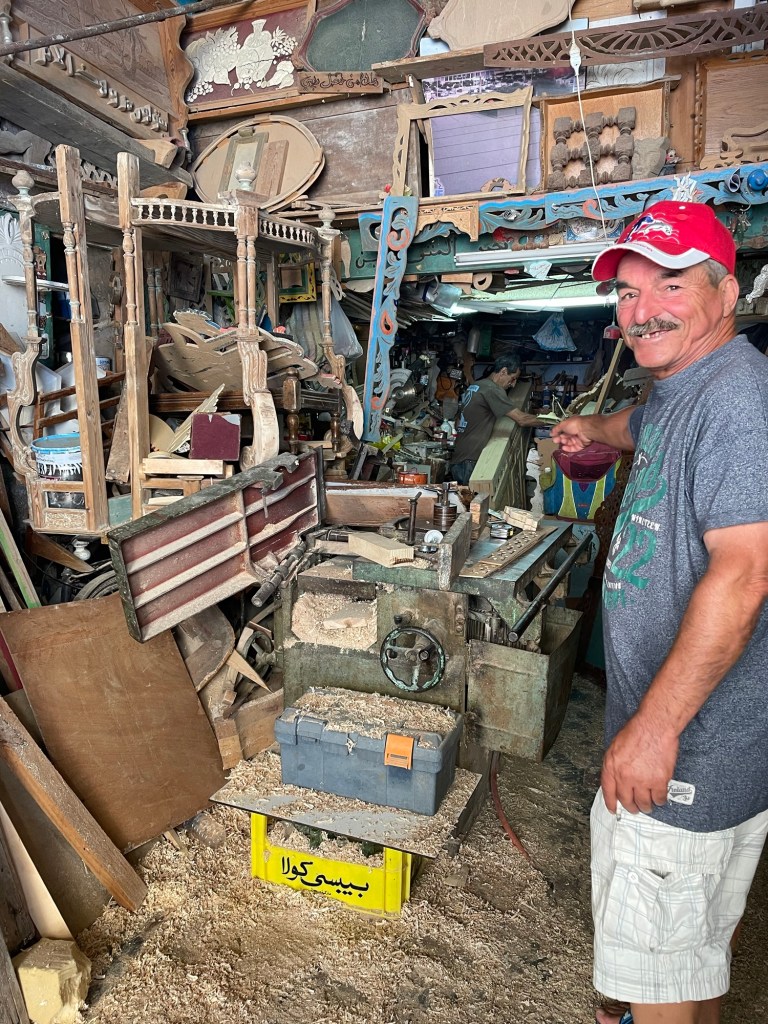
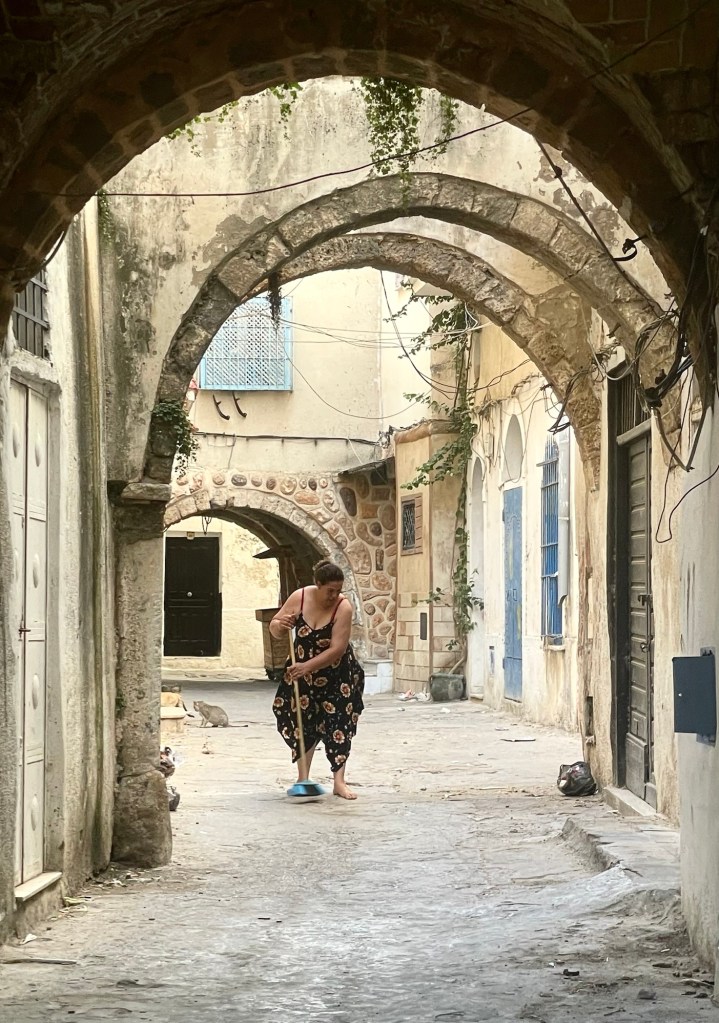
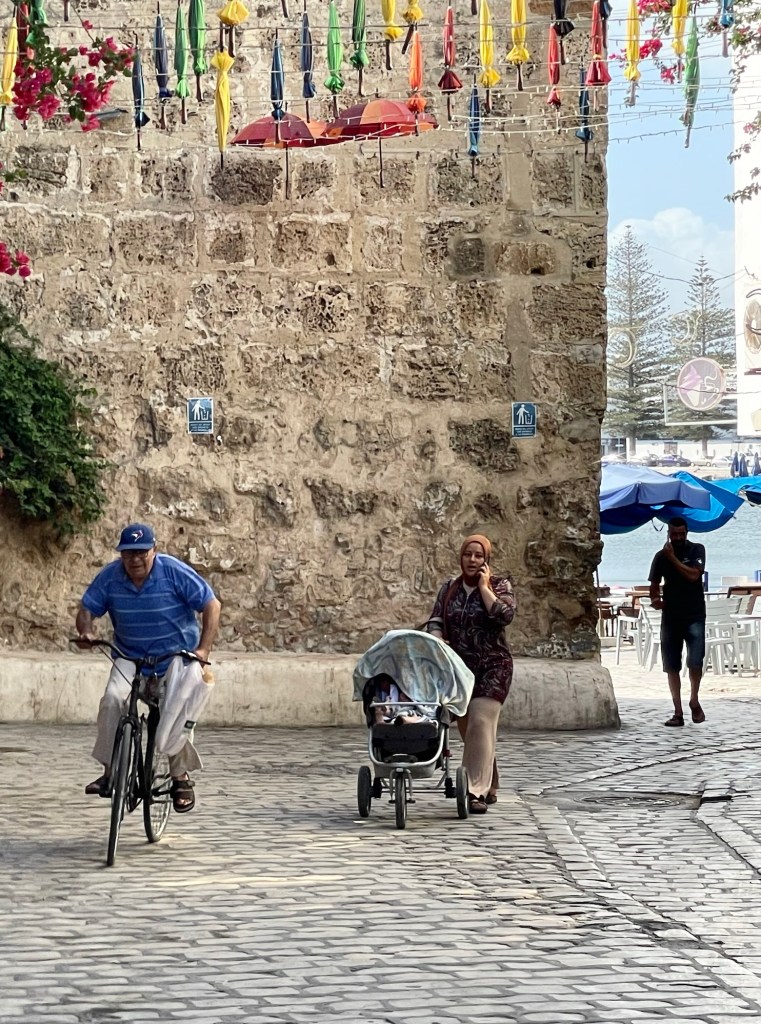
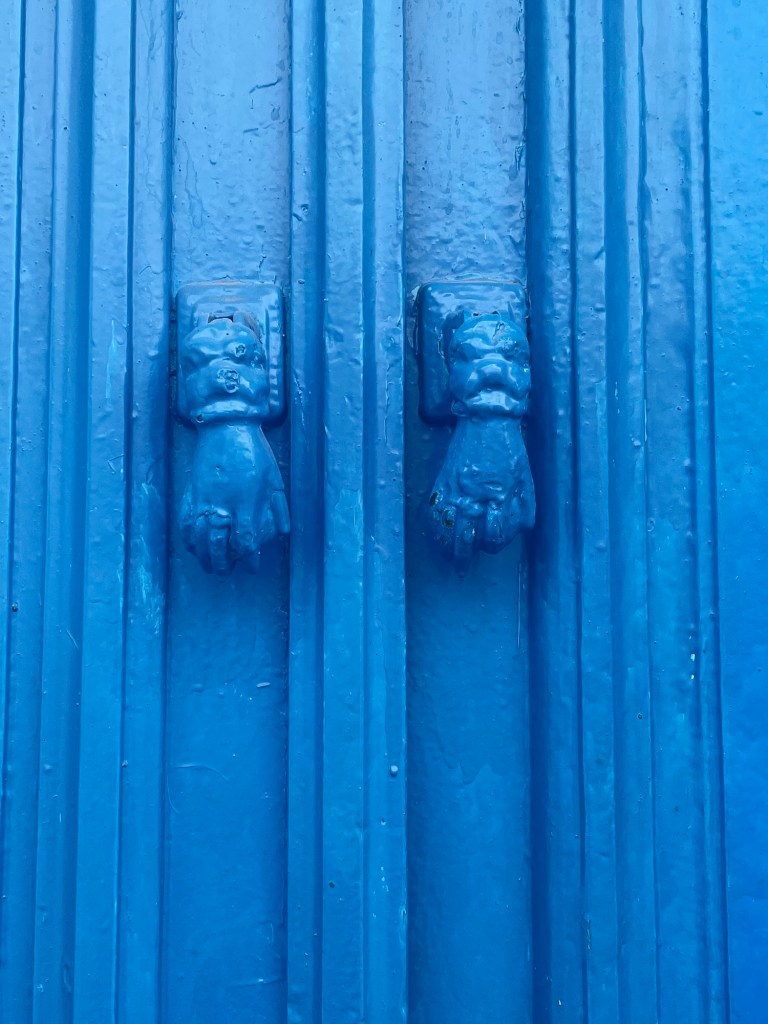
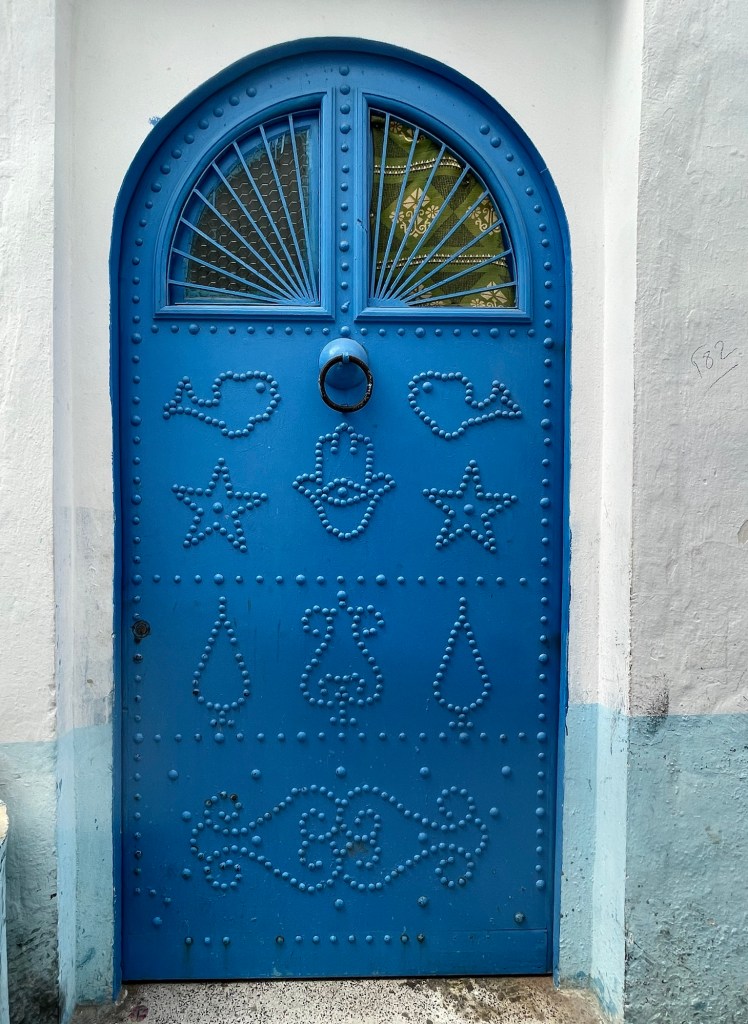
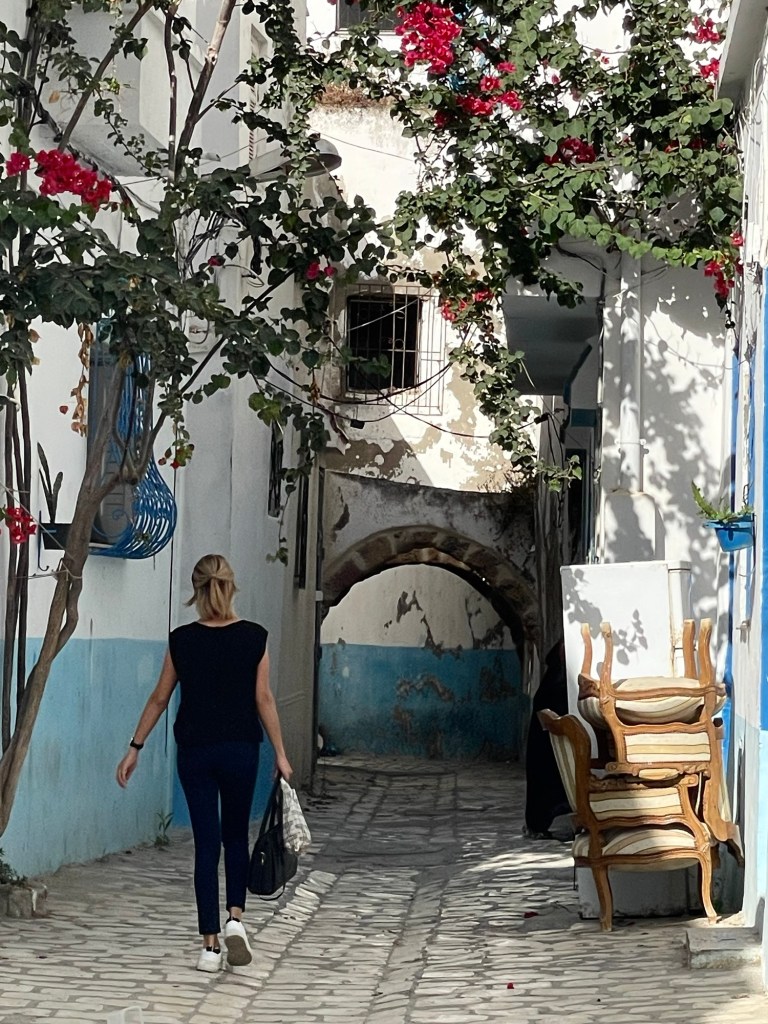
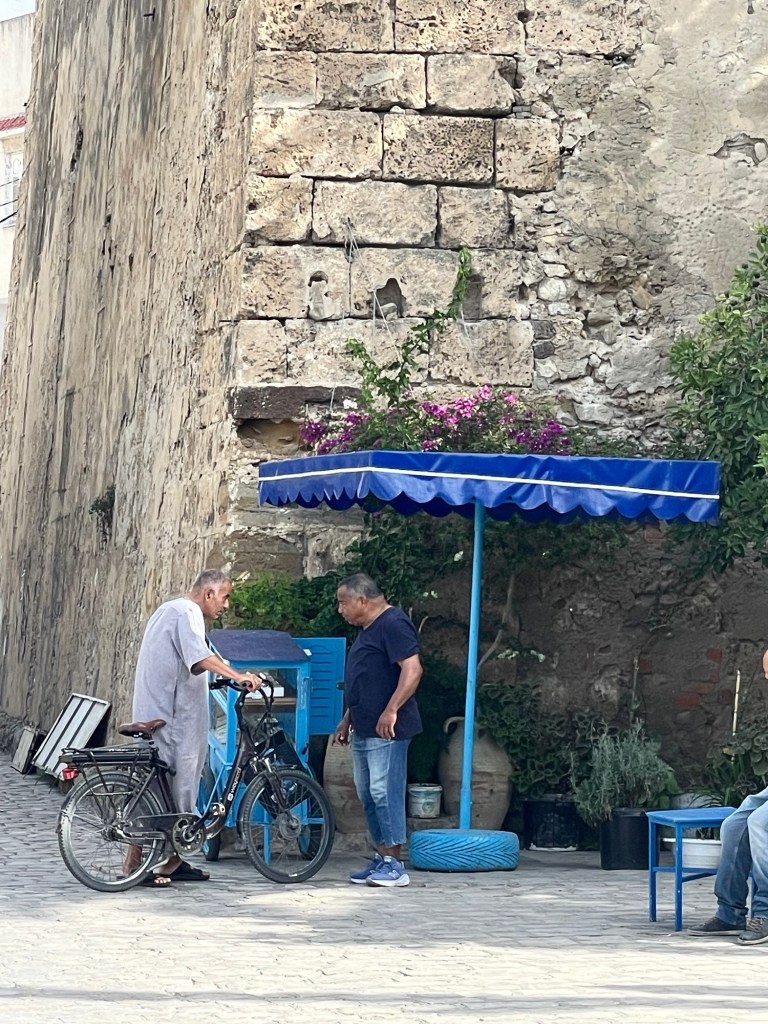
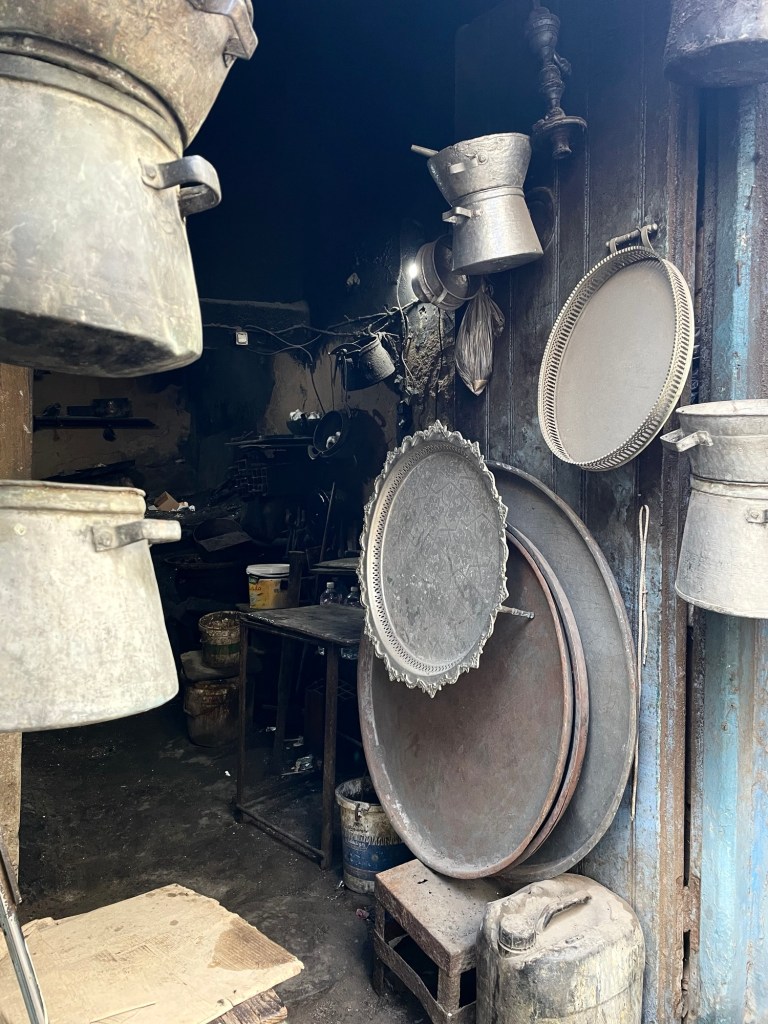
He told us about the symbols on many of the doors and the meaning behind the different door handles. He also took us through the fish, meat and fruit and vegetable markets, shouting hello to people as he went.
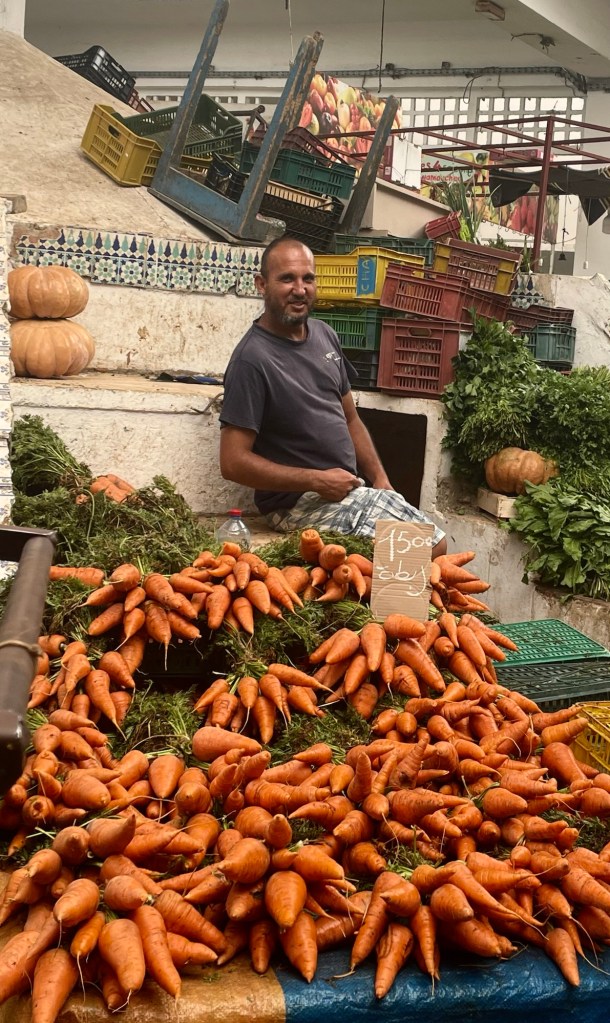
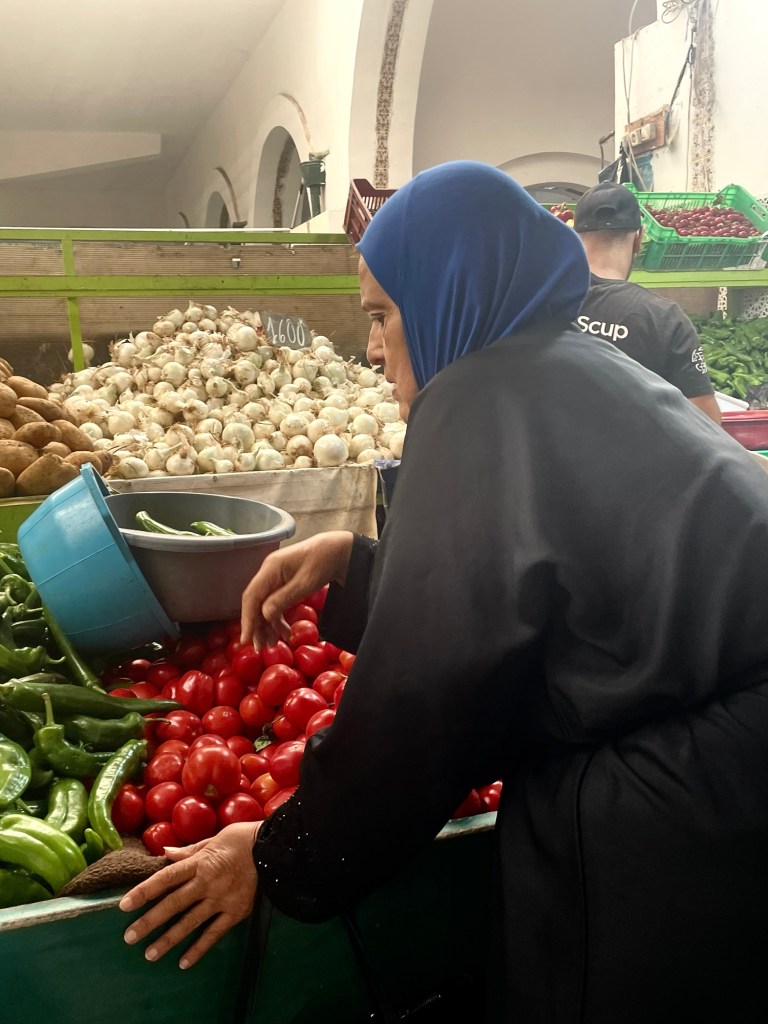
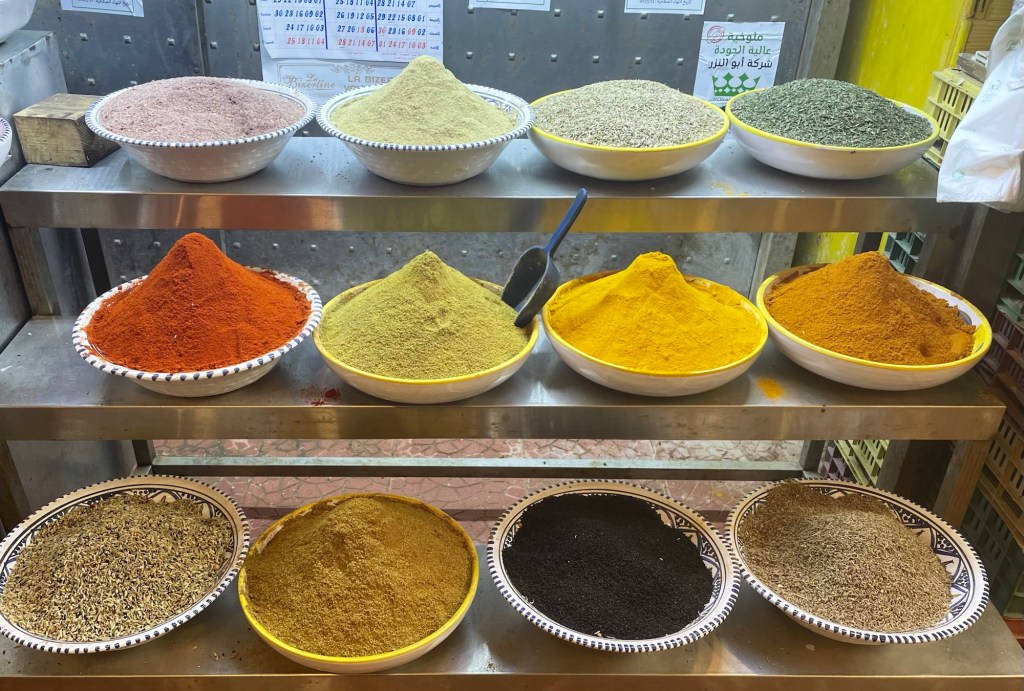
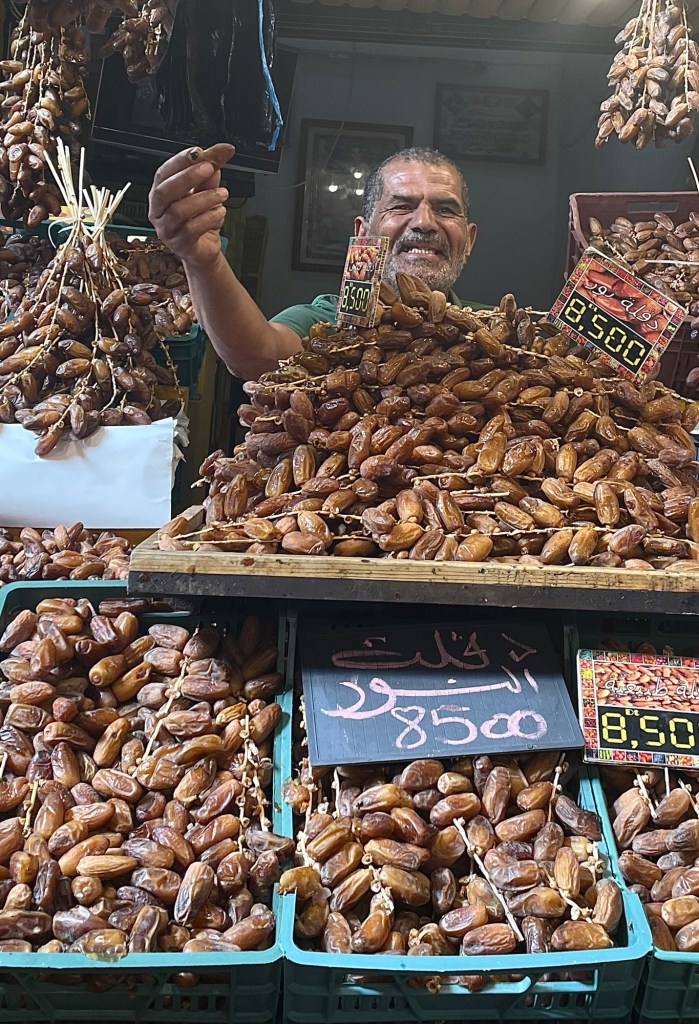
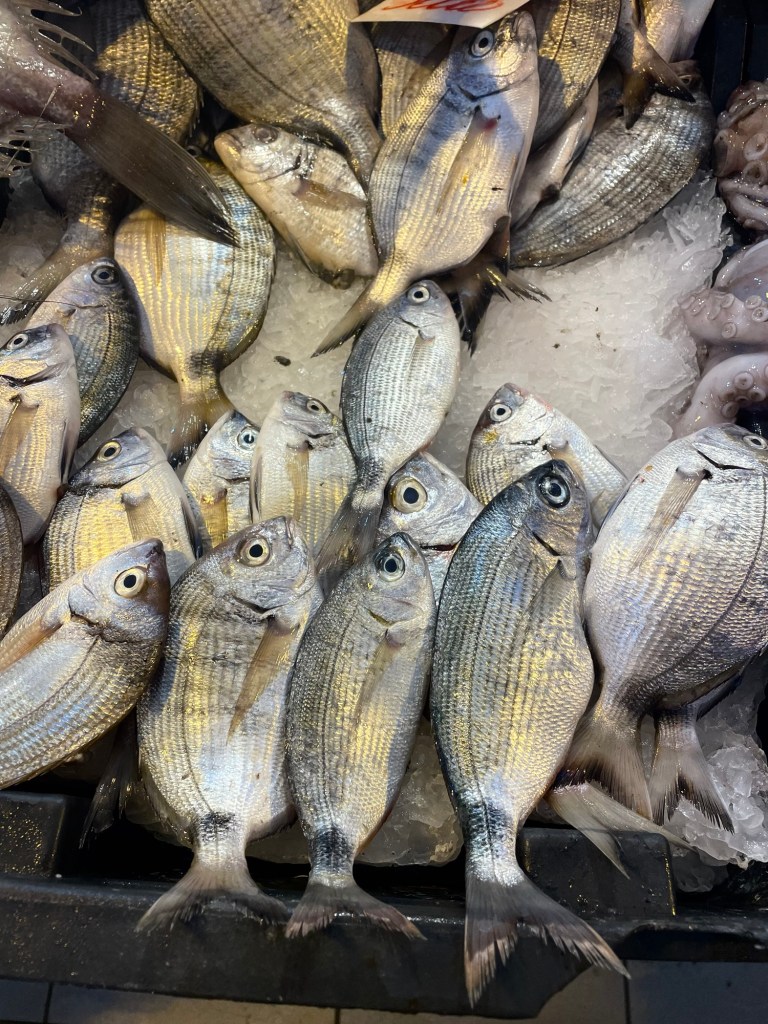
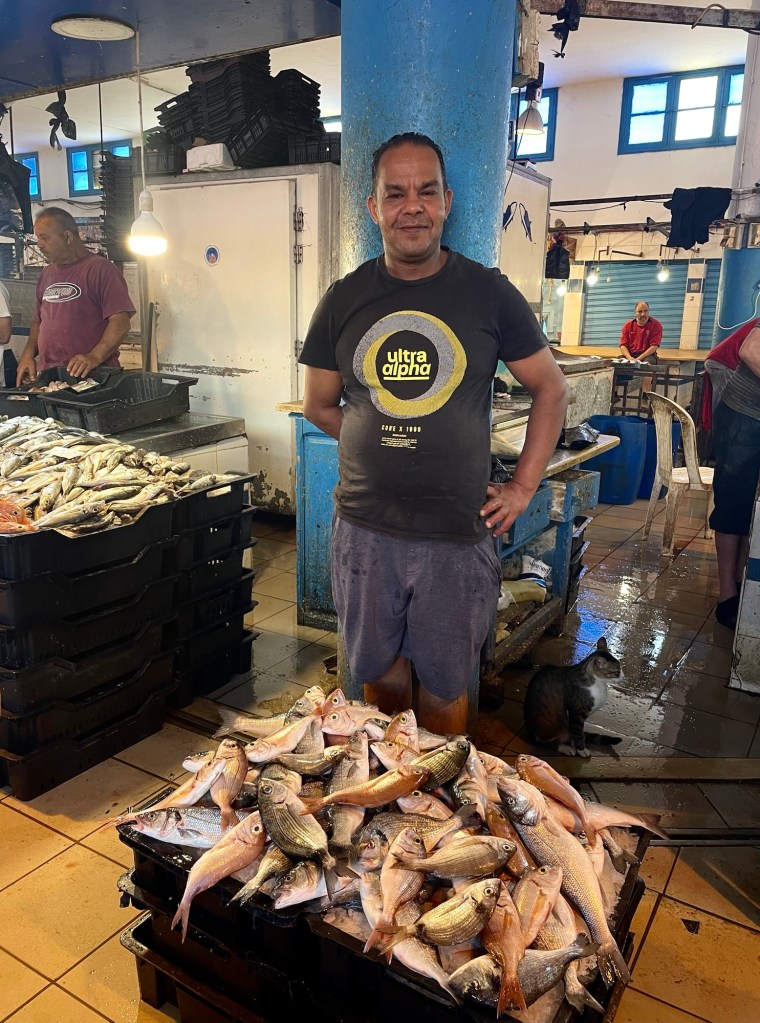
We suspected that Samir did this often, making his living by approaching tourists just as he had with us. We asked him about it and he proudly showed us a video of his tour on You Tube which an Italian couple had filmed and posted on their travel channel. We happily paid him at the end of the tour, pleased that we’d taken the chance as it had been a much more interesting walk than going it alone.
On our walk we’d seen an area with restaurants and cafes that we hadn’t visited before so returned in the evening for dinner. The streets were very crowded and motor scooters buzzed back and forth among the pedestrians … a little too close for comfort at times. It was all a bit noisy and chaotic, so instead we found a table near a pizza/kebab stall facing the water and ate while watching the activities around us.
Through a Facebook sailing group, we’d been recommended a local man, Mohammed, to help us with whatever we needed in Bizerte. Over the first few days he found someone to fix our autopilot, a laundry service, and a driver to take us to Tunis. Tunis is the capital of Tunisia and we were keen to visit the medina and other historical sites that we’d read and heard about.
The driver picked us up the next morning in a Volkwagon Golf. As there were four of us it was a bit of a tight squeeze but we figured it was only an hour’s drive so could put up with it. There were no seatbelts in the back seat. Our friend in the front seat put his on. The driver had his done up but not around him … to stop the car beeping I guess.
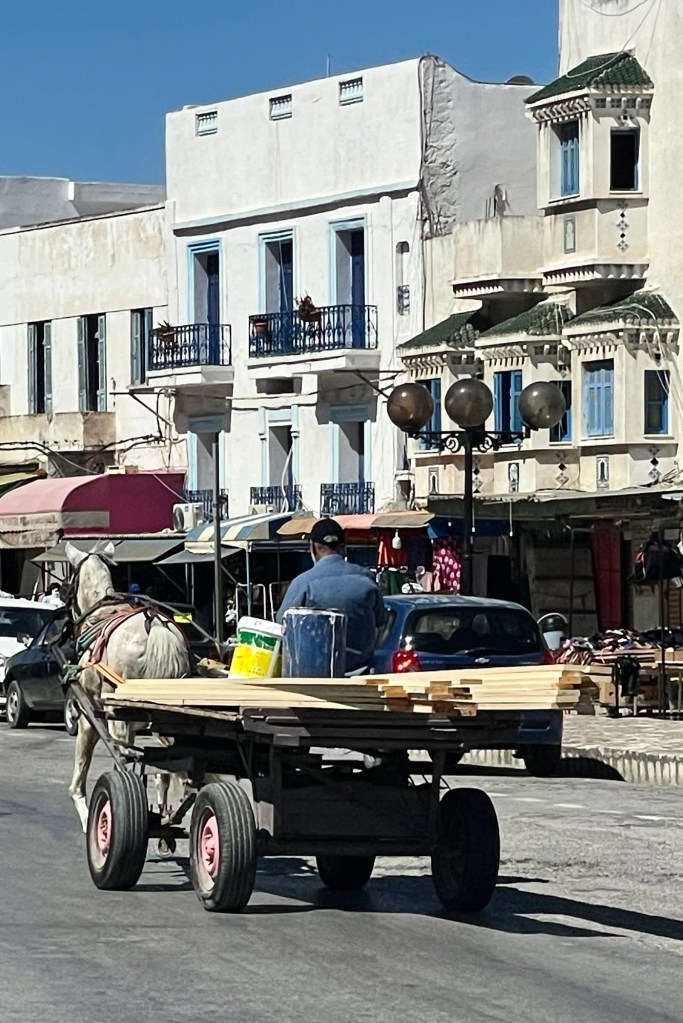
Life in Tunisia is like stepping back in time. People still smoke in restaurants. Nobody wears a seatbelt and kids climb around the car as their parents drive. Bicycle or motorcycle helmet are never worn. People throw rubbish on the street instead of using a bin. They text and talk on the phone while they are driving. Almost every man smokes. Many restaurants only take cash.
Our driver had limited English but made the effort to tell us about our surroundings as we drove past farmland and through small towns. We told him we wanted to visit the medina and he suggested we also visit another site. As we hit the edge of the city, the traffic came to a grinding halt. There were police blocking some side streets and directing traffic. Perhaps the President is out walking around … he is a good man and does this often, said our driver. Eventually we made our way through the traffic jam and towards what we thought was the medina. A few times he stopped to ask directions from other drivers and people on the footpath. We were very confused. It was clear he was trying to find the site he’d recommended but didn’t know the way.
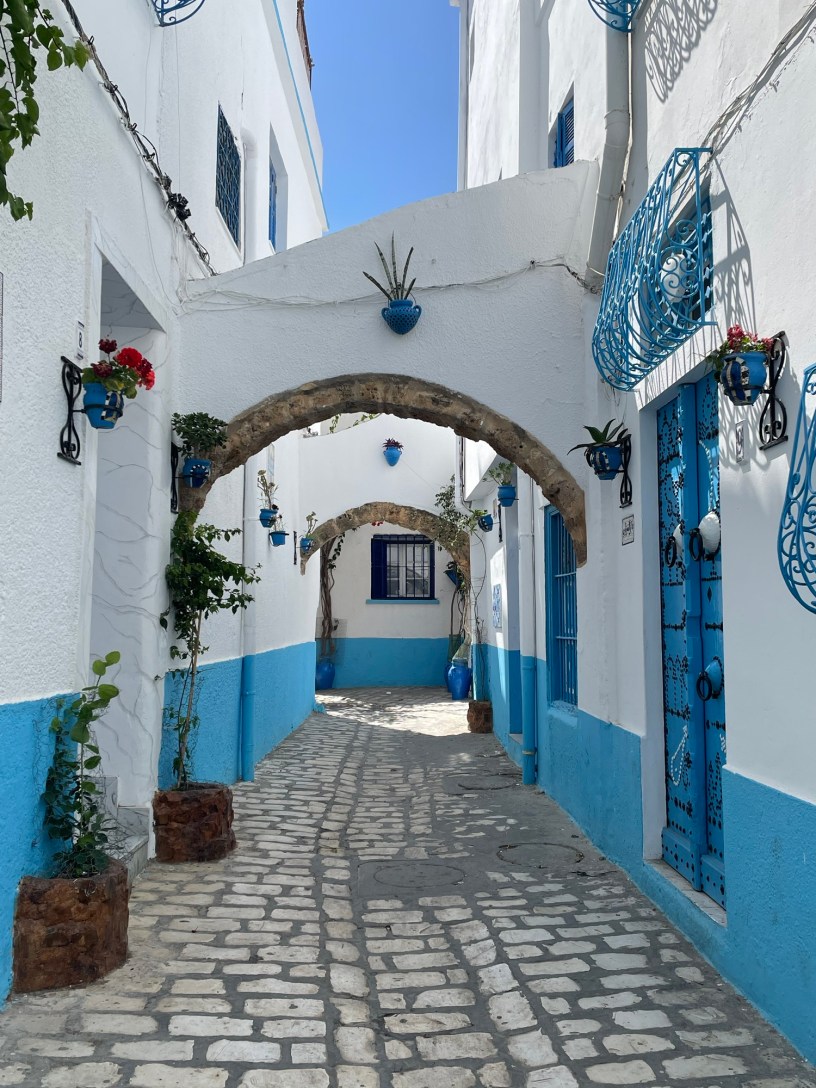
After three hours we arrived at Sidi Bou Said… a village about 20km north of Tunis on the coast. It was evident from buses in the car park that it was a popular tourist destination. We were so happy to be out of the car we didn’t care where we were. We spent an hour wandering around the town with its blue and white theme and amazing views over the water and down to the marina and beach. The town is well-known for the Tunisian artists who have lived in, or visited, the town and there were many galleries and shops selling local art.
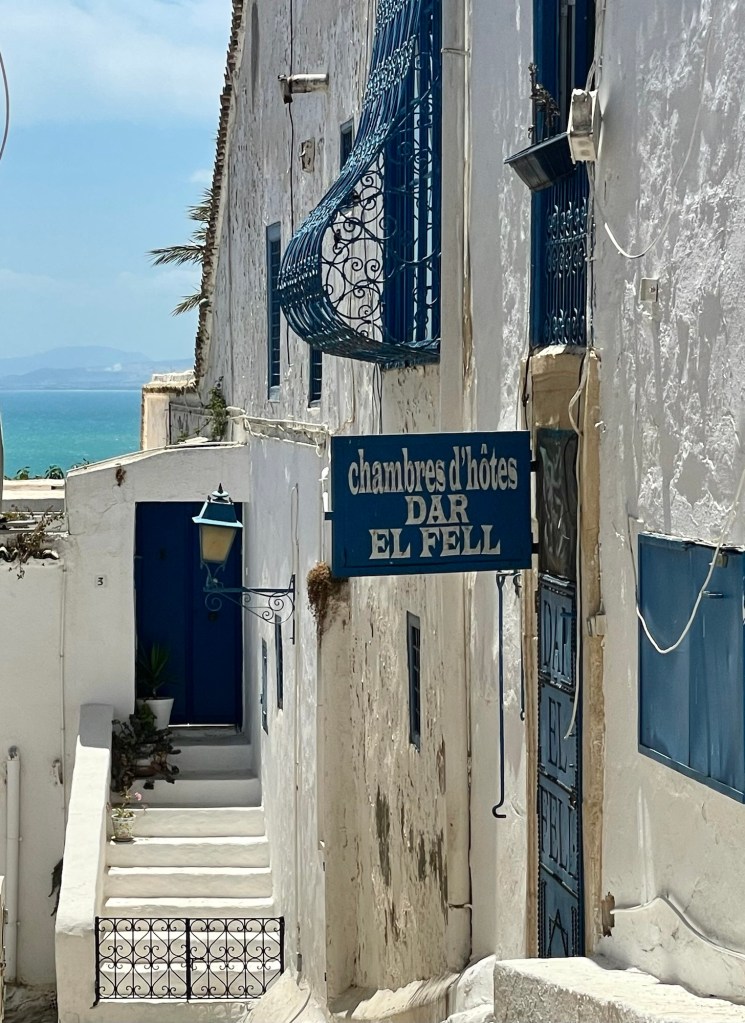
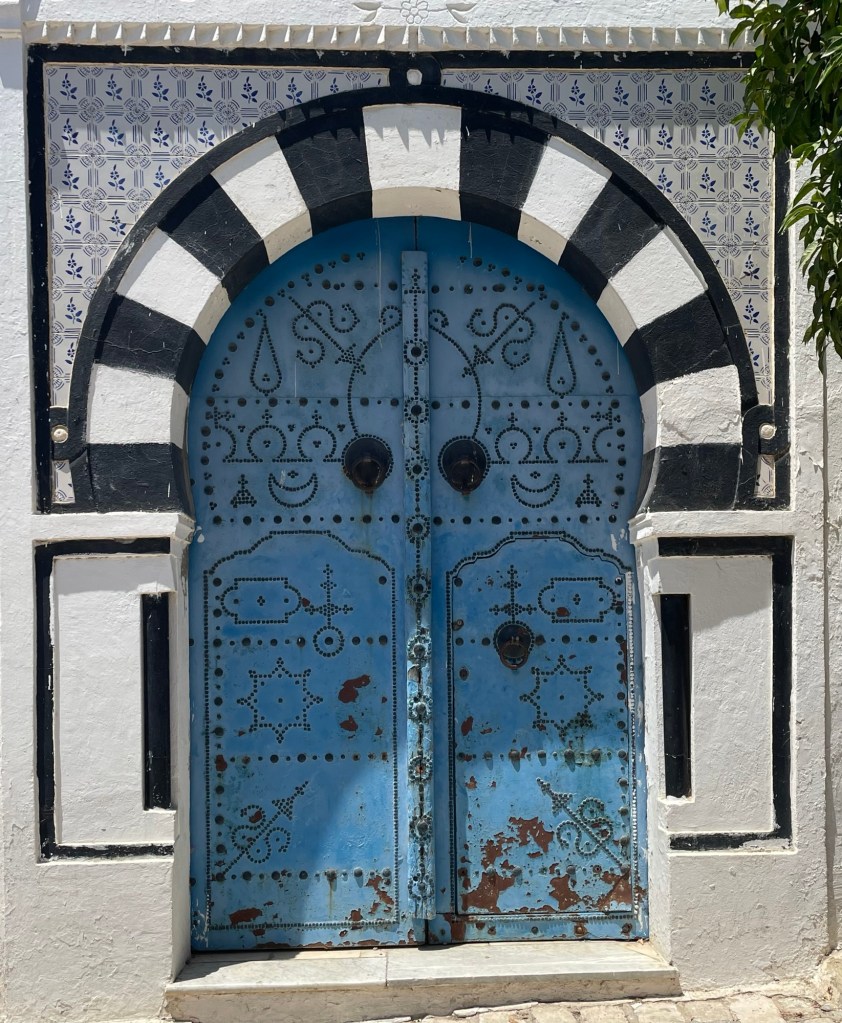
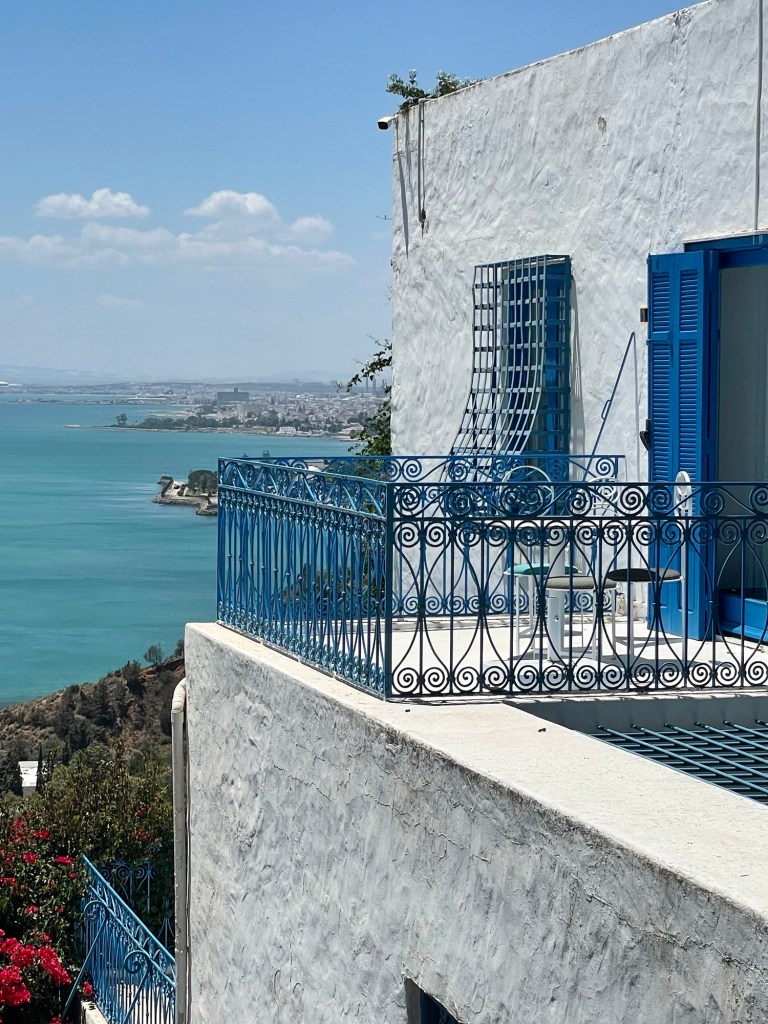
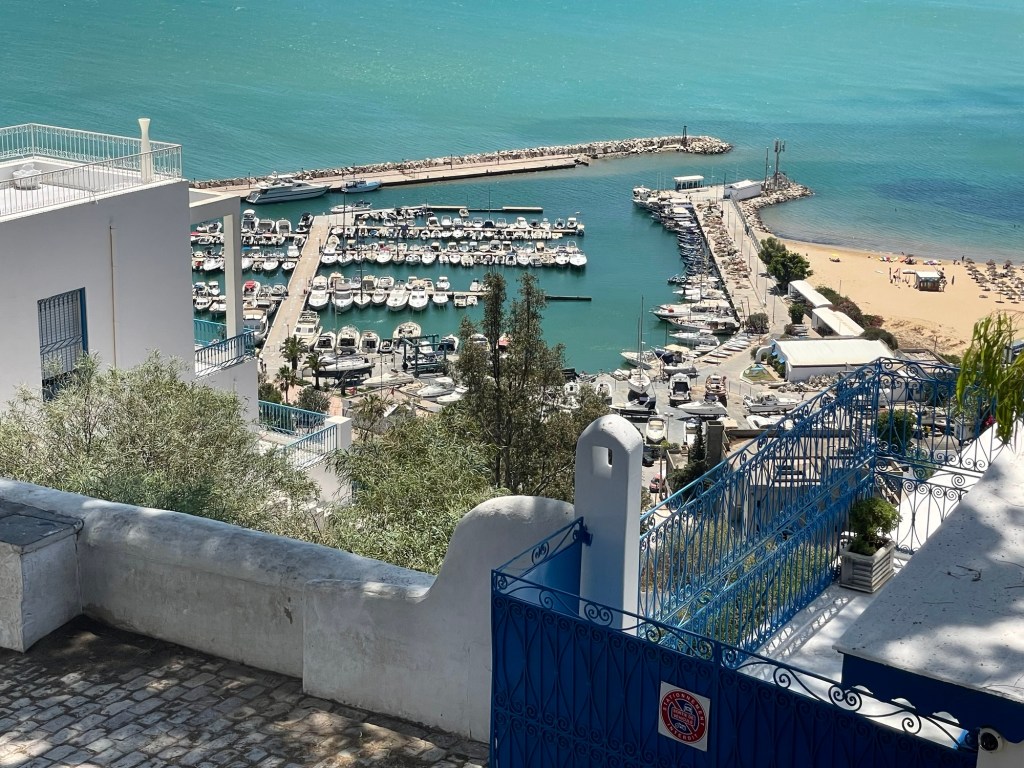
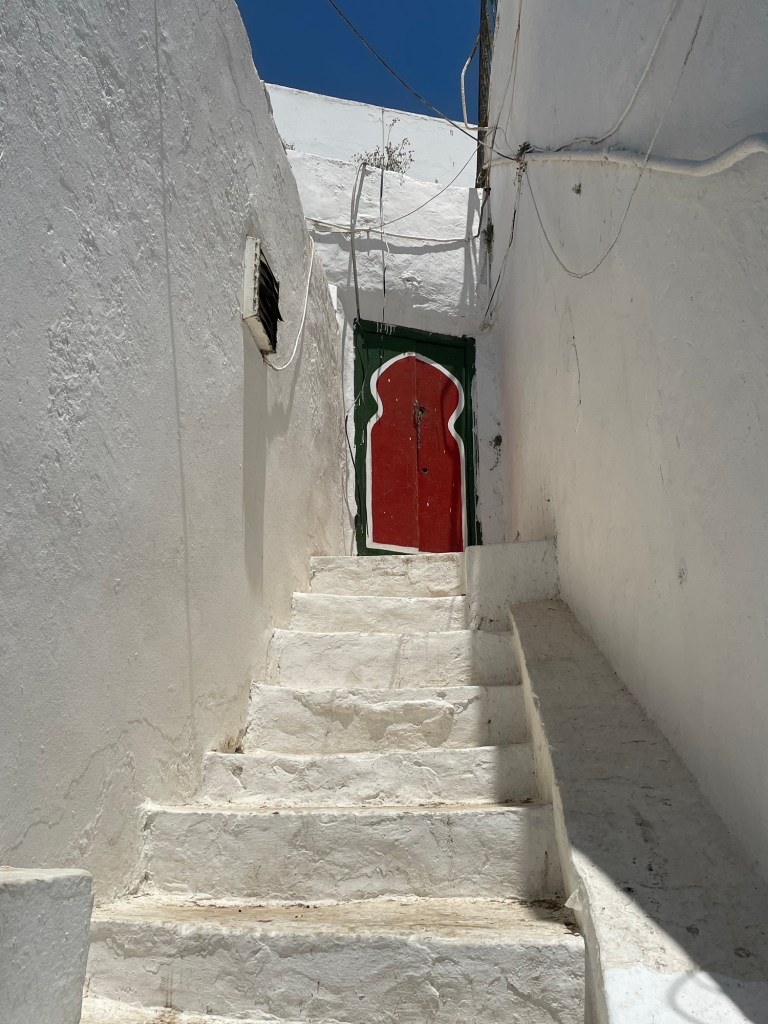
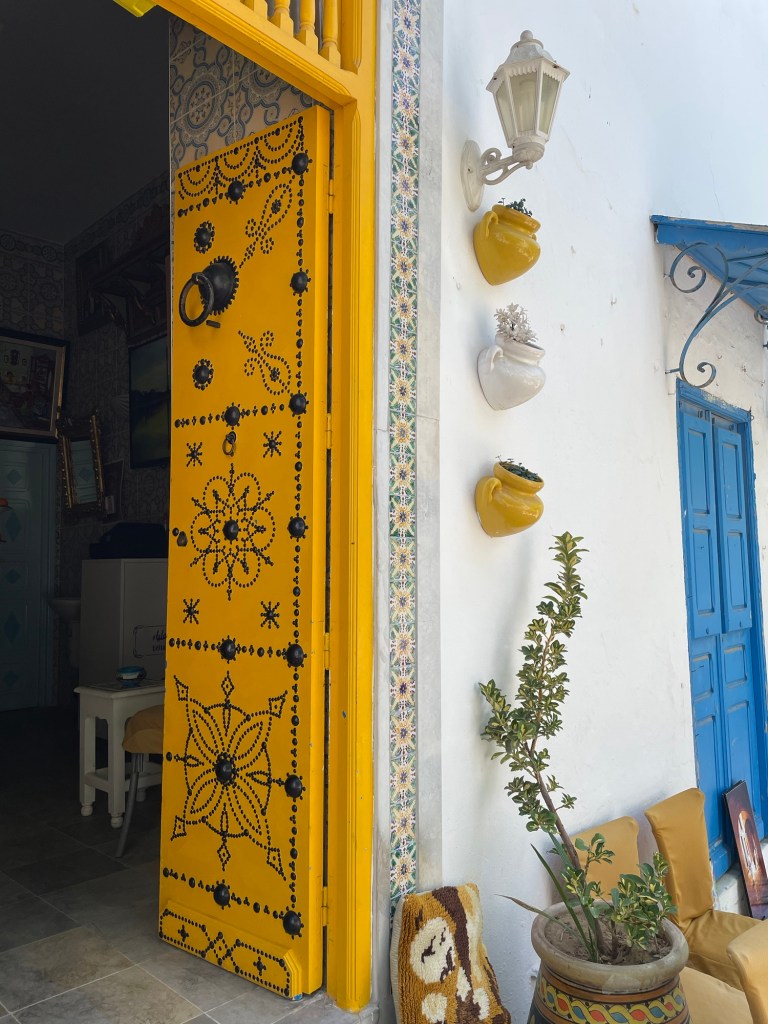
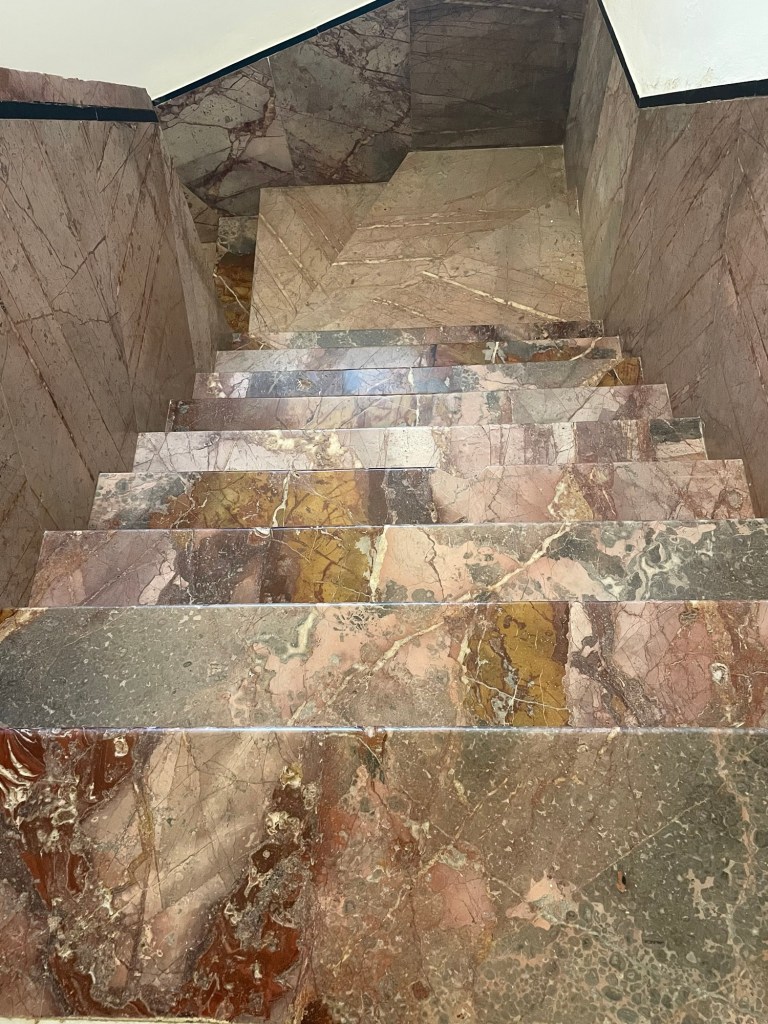
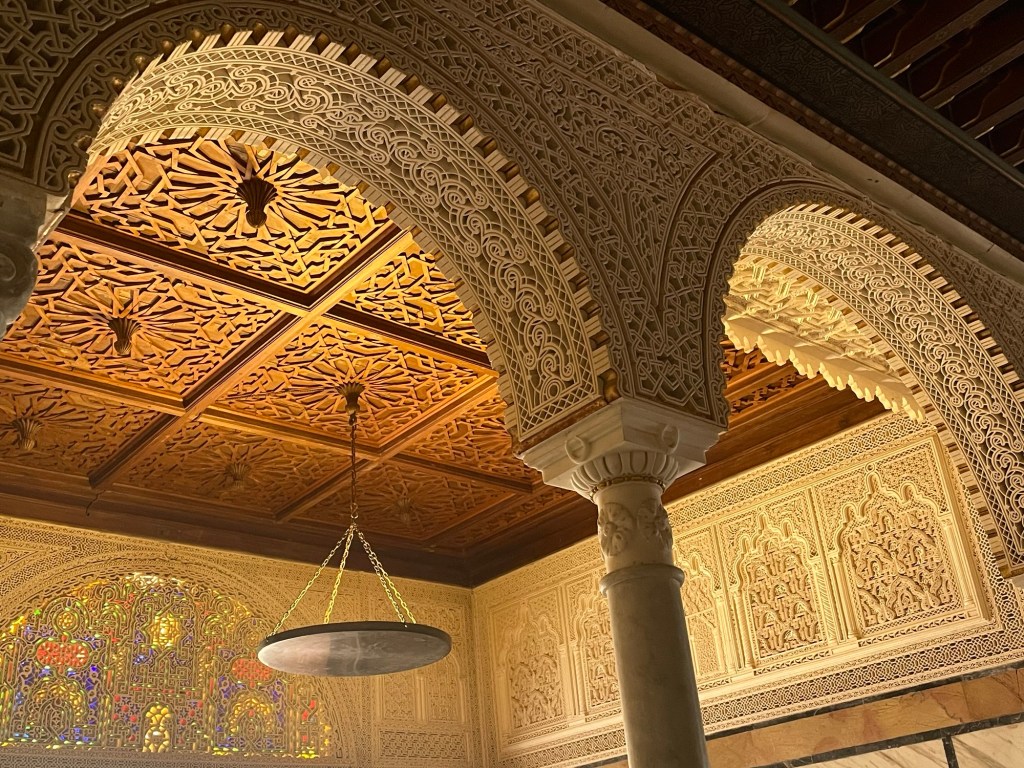
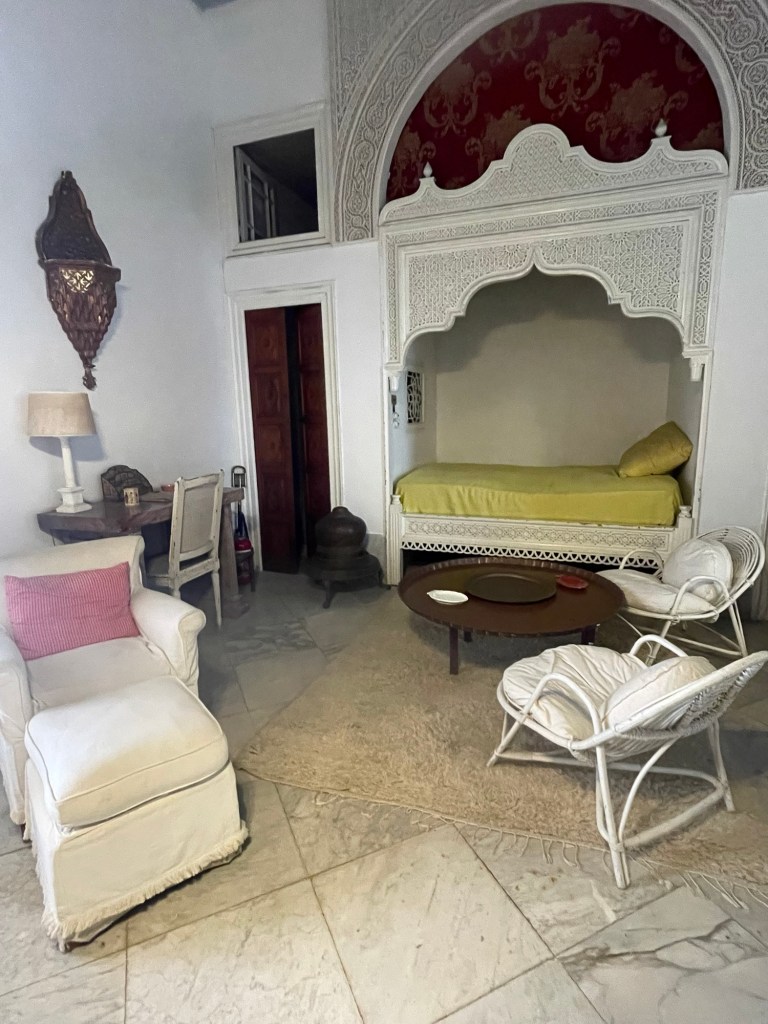
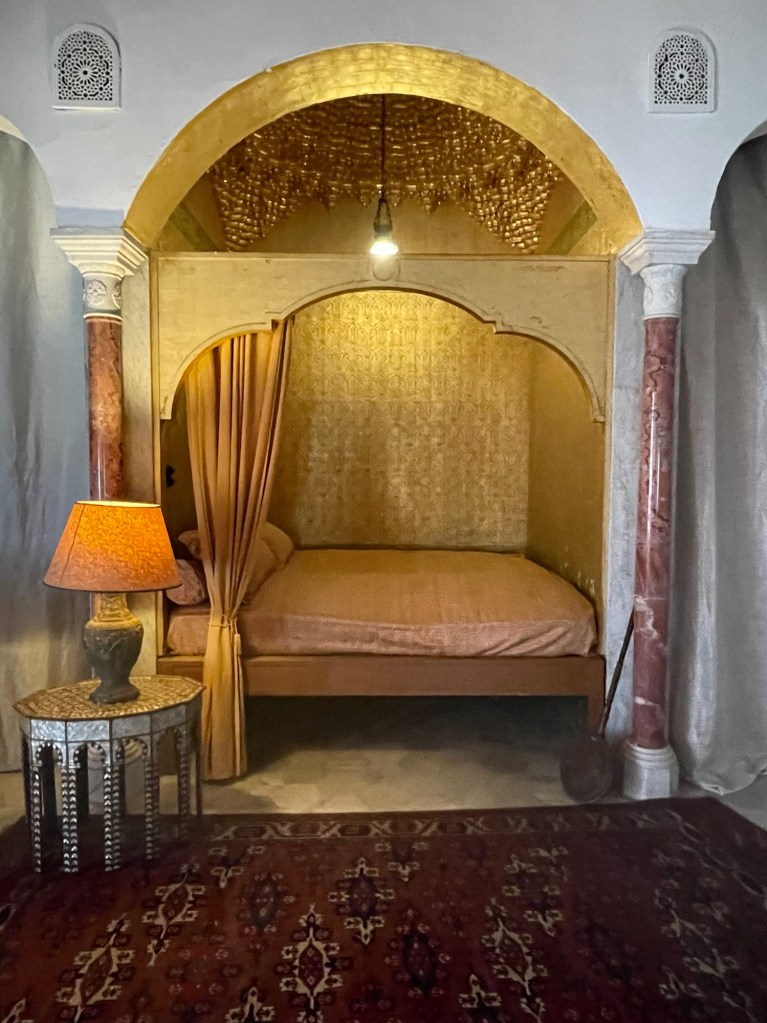
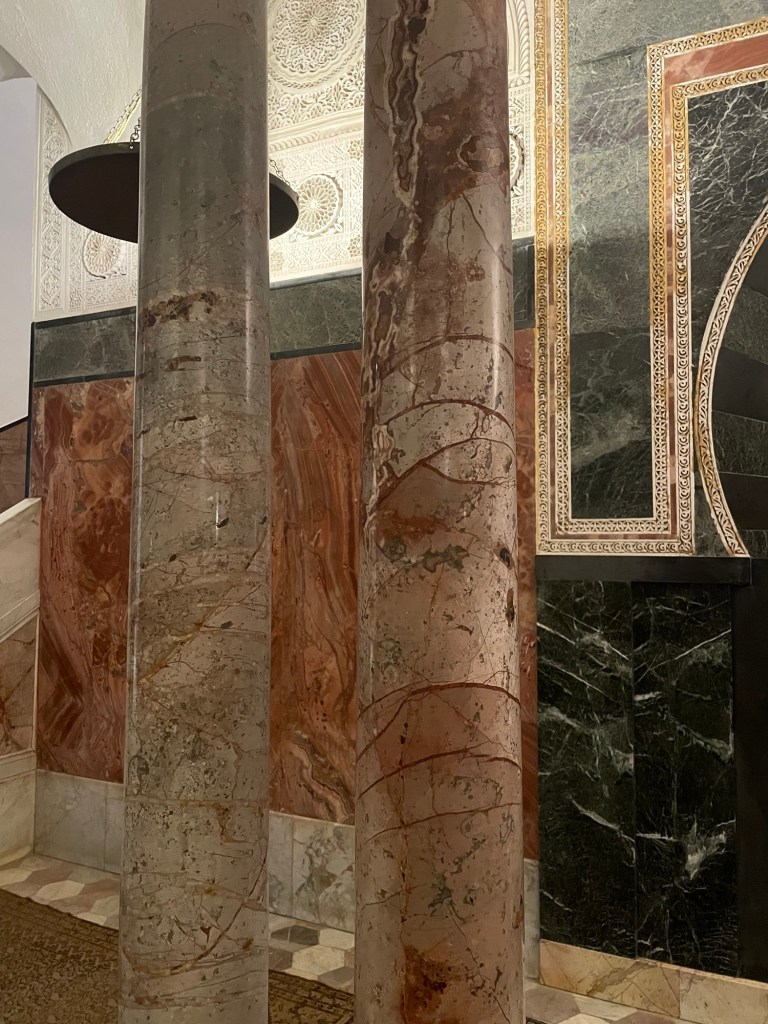
The blue and white theme was introduced in the 1920’s by Rodolphe d’Érlanger and his home, Ennejma Ezzahra (meaning Star of Venus), is now a museum and considered a jewel of Arab-Islamic architecture in Tunisia. Taking a little over ten years to build, it is filled with exquisite craftmanship including carved stucco, wooden inlay work, marble floors and columns, ornate furniture and an internationally renowned collection of traditional musical instruments. Our driver had suggested we visit Ennejma Ezzahra and we were very pleased he did, as it turned out to be the highlight of our day.
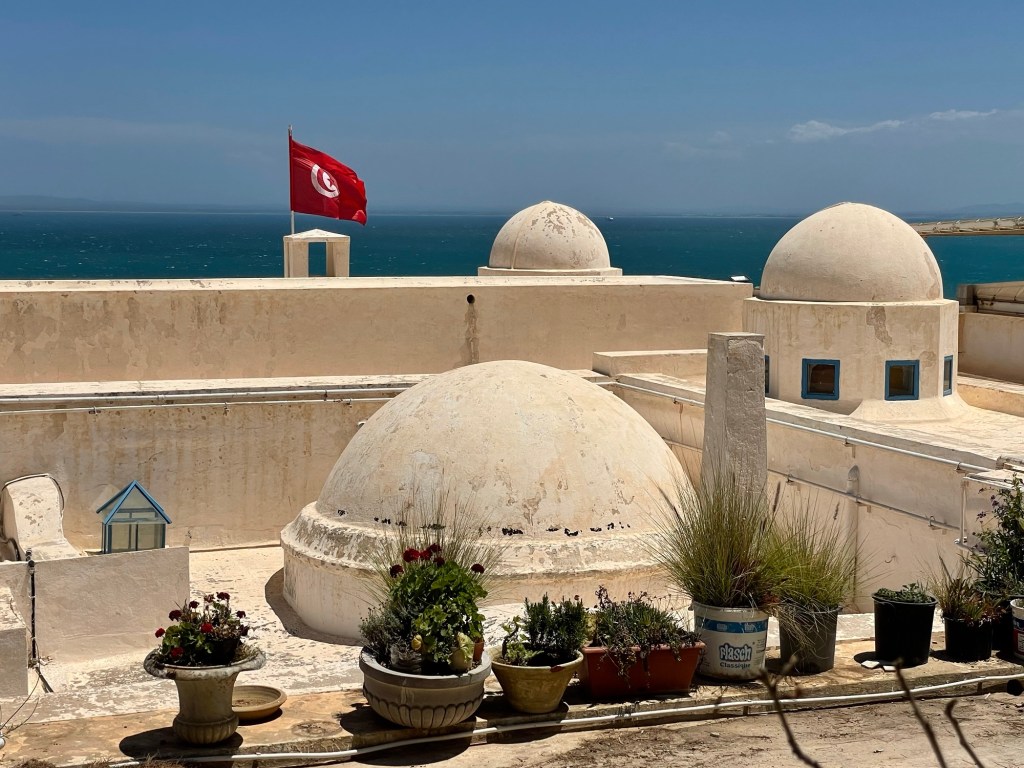
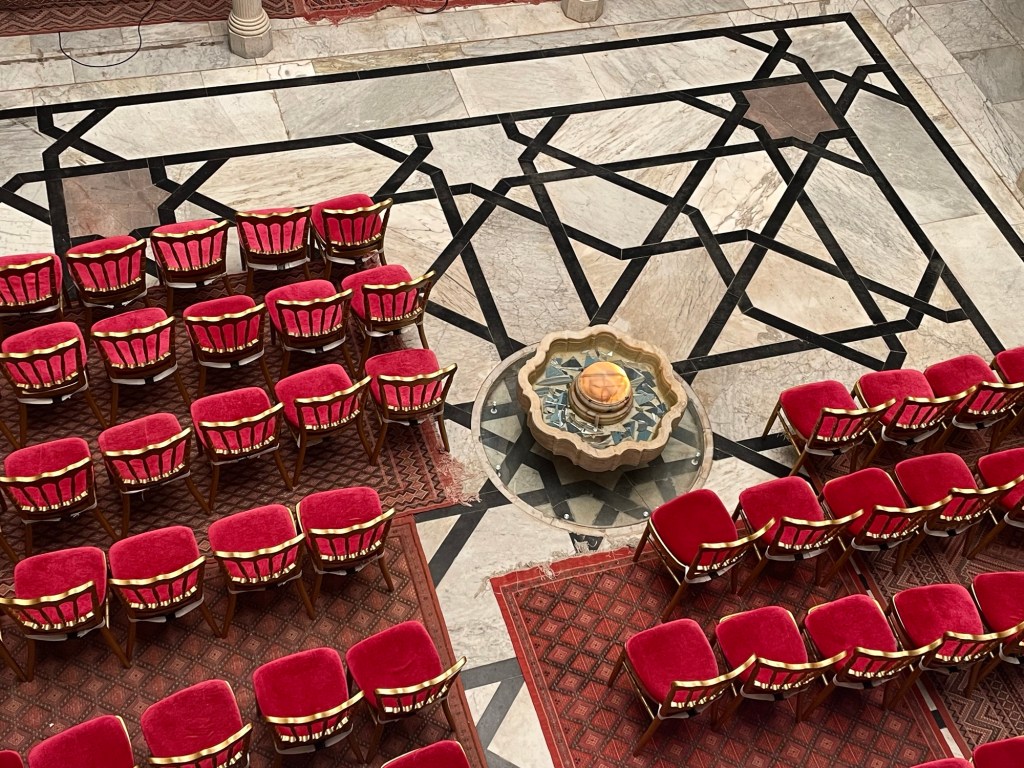
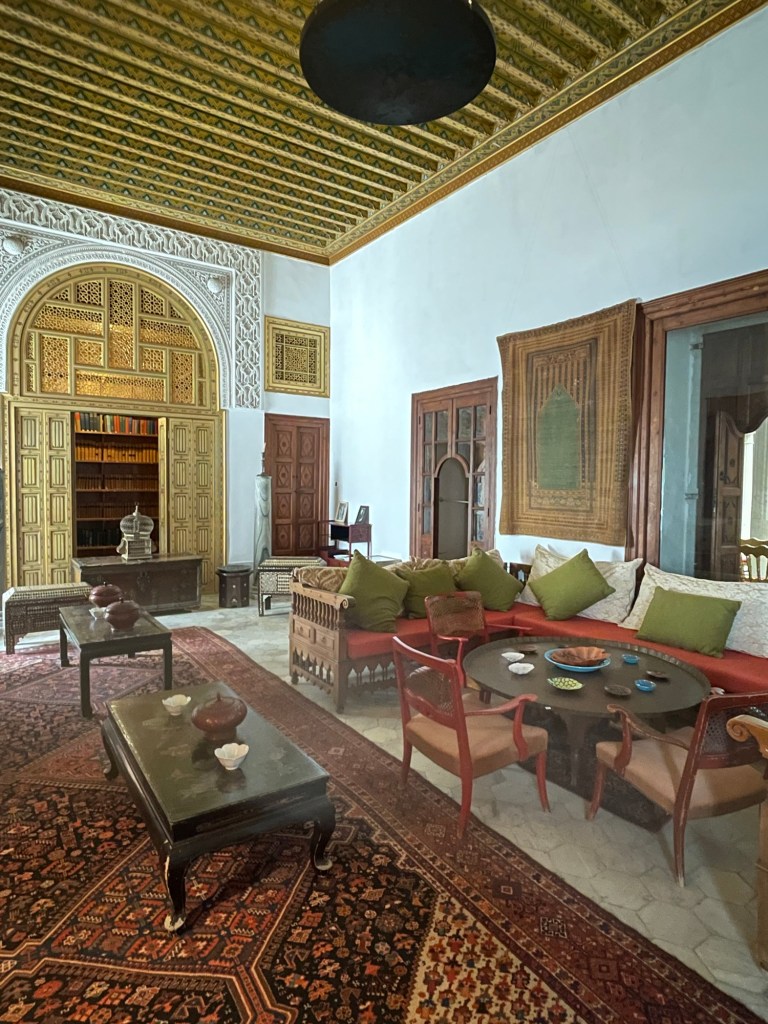
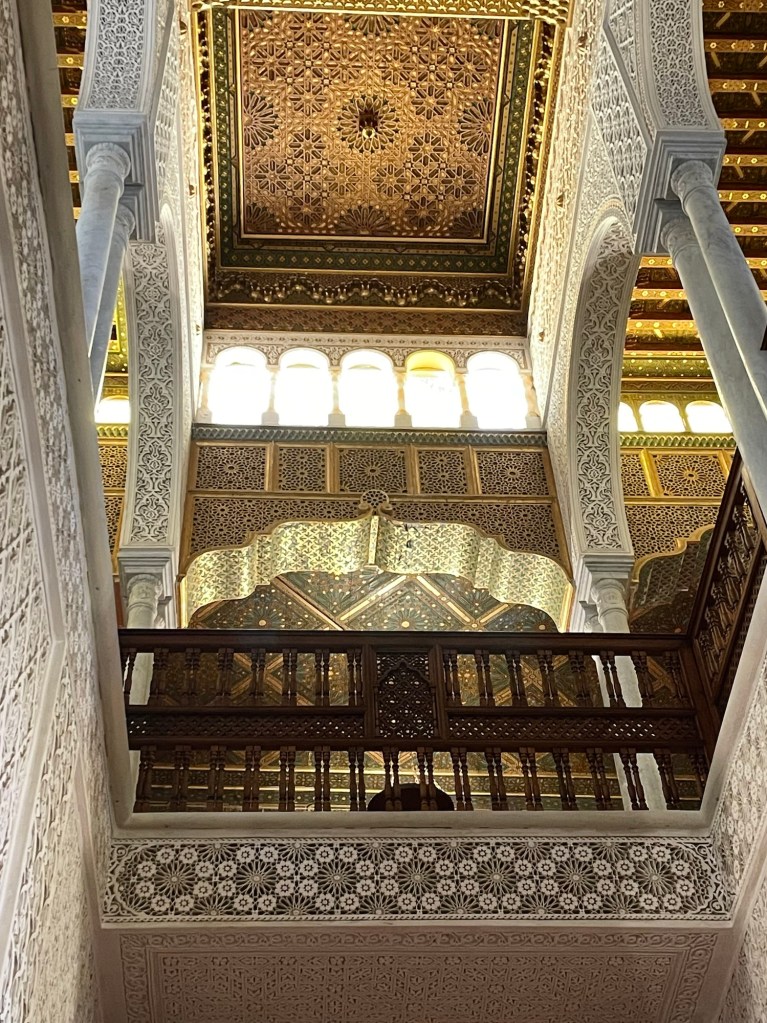
We couldn’t face driving back into the centre of the city through the traffic and chaos, so opted to go back to the boat. We’d missed out on the medina but had seen some fascinating sights. It had been a good day despite the frustrating start.
When I visited Turkey many years ago with my daughter, we went to a Hammam, a traditional middle eastern bath house where you can bath and be scrubbed. I’d seen one while walking with Samir a few days earlier and although I had little idea of what to expect, figured it was worth a try. After four weeks on the boat, I needed a good scrub!
I was by met by a friendly woman at the entrance. Although she didn’t have a common language, we somehow settled on what I wanted with some help from another customer who spoke a little English. I felt very humbled when she apologised for her English, explaining that she only spoke Arabic, French and Italian! I was led into the very authentic bath house and left an hour later extremely clean and minus a layer of skin.
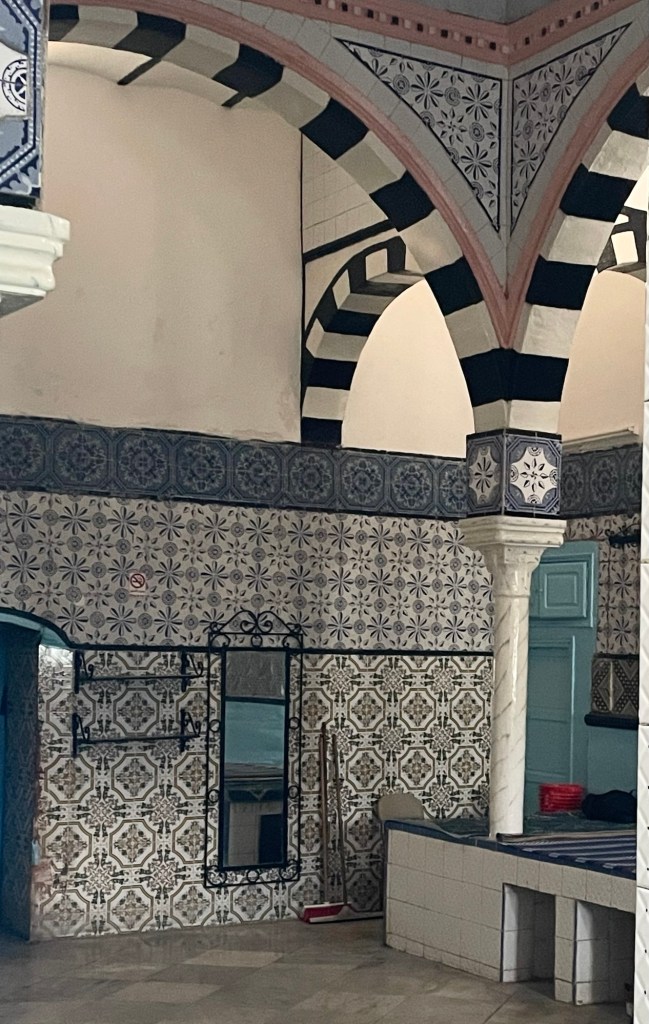
On the way back to the boat, I stopped at the local market for fruit and vegetables and bought some beautiful flat bread from a small vendor on the street, still warm from the oven. After four days here the streets of the old town had become very familiar, and I was feeling quite comfortable with the local way of life.
On Friday morning the wind finally eased. We met with the customs officials and checked out of Bizerte. This required another photo and thumb print and a check of the boat to ensure we had no stowaways. It had been a challenging visit, mostly due to the strong, relentless winds and at times we’d felt a little out of our comfort zone. Nonetheless, it had been a fascinating and worthwhile experience. What I will remember most of all though are the people. Their warmth, kindness, integrity and sense of humour shone through everywhere I went and had left a lasting impression on me.